
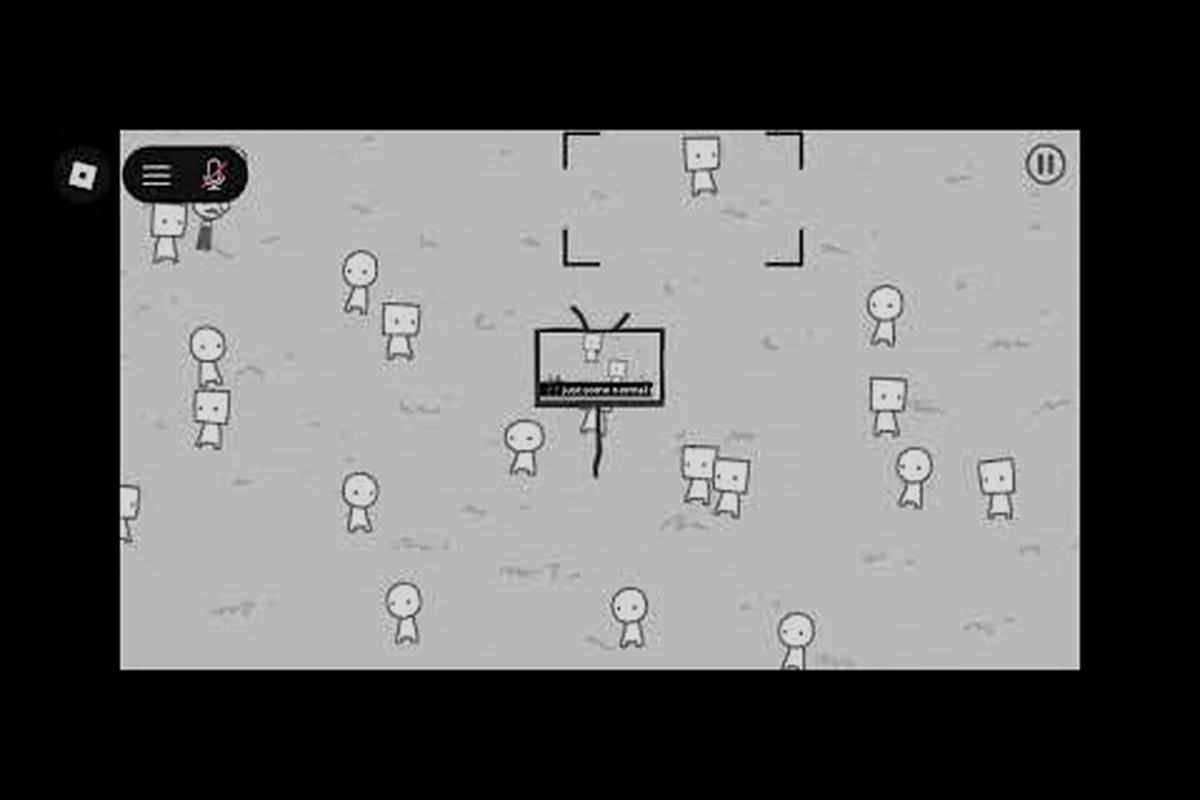
If you are searching for the Say Cheese Roblox how long to beat answer, the honest baseline is that the creator has not published a completion time. Measure your own run instead, because reading, repeated decisions, and unfamiliarity can make the same playthrough take very different amounts of time.
No Official Completion Time Exists
Say Cheese! launched on October 19, 2026, but its official page does not provide a verified average completion time, a minimum run, or a full-playthrough target. That absence matters because any number presented as the definitive answer would be an estimate rather than creator-confirmed data.
The official the official Say Cheese! listing page describes an Adventure/Story experience in which you play a journalist hired by “Big Media.” The setting is a park, and the central framing asks whether to spread chaos or change fate in a way that can bring hope. Because those choices may involve reading and reacting rather than repeating a fixed sequence of tasks, elapsed time is more useful than a promised exact number.
| What the official page confirms | What it does not confirm |
|---|---|
| Release date: October 19, 2026 | Average completion time |
| Adventure/Story genre | Shortest possible playthrough |
| Journalist assigned by Big Media | A fixed sequence of actions |
| A park setting | Exact time for every decision |
| A choice-driven premise | A creator-verified speedrun time |
Official Snapshot, October 31, 2026: the game had 3,955,237 visits, 13,403 players, 49,747 favorites, and ratings of 12,154 likes against 1,369 dislikes. These figures show substantial attention at that moment, but they do not reveal how long anyone took to finish. A maximum server capacity of 12 likewise says nothing about the length of an individual experience.
Treat Every Shared Number as an Estimate
A completion estimate becomes more credible when its author explains how it was obtained. A timed run on a second playthrough can be useful, while a guess based only on the opening screen is not. Ask whether the clock started at the first meaningful action, whether pauses were removed, and whether the player understood the controls and story premise beforehand.
Community videos (as of 2026-10-31) discuss multiple endings; the creator has not published a list, a count or any ending names, so treat them as unconfirmed. That means a video labeled as a “Say Cheese Roblox speedrun” can demonstrate one player’s route, but it cannot establish an official target or a guaranteed best time. The first-passage breakdown can help you separate learning time from a later measured run.
Measuring Your Own Session
A practical answer to the Say Cheese Roblox how long to beat question comes from separating three clocks: active play, decision reading, and interruptions. Start the first clock when you can control the character, pause it when a menu or dialogue is open, and record both totals if you want an honest comparison with another player.
Build a Simple Time Log
Use a phone timer, spreadsheet, or stopwatch and record one row for each natural section of your session. The official page does not document named sections, so use descriptive labels such as “opening,” “park interaction,” and “decision review” only if they correspond to what you see in game.
| Phase | Start | End |
|---|---|---|
| Opening interaction | 00:00 | 08:42 |
| First decision review | 08:42 | 14:10 |
| Park exploration | 14:10 | 26:35 |
| Closing decision review | 26:35 | 31:18 |
Active-play total: subtract every paused interval from the final timer reading. Reading total: add the periods spent understanding dialogue or considering a decision. Full-session total: include the entire time from joining to reaching your stopping point, including menus and brief distractions.
This approach prevents a common measurement error: calling an uninterrupted navigation run a normal completion estimate. A player who knows what to select may finish much faster, while a first-time player may need to reread text, explore optional interactions, or restart after realizing that a choice did not match their intention.
Separate Completion From Observation
A run becomes useful as a completion benchmark only when you define “complete.” You can record the moment you reach a final screen, the moment you make the last meaningful decision, or the point at which the game no longer prompts further interaction. These are different stopping points, so mixing them produces misleading averages.
Before starting, write down one definition of “complete,” such as reaching the final screen, submitting the final meaningful decision, or reaching a point where Say Cheese no longer prompts another interaction. For example, if you are timing a Say Cheese Roblox run, record the timer when the last required prompt disappears—not when you begin celebrating, because celebrations and post-run navigation can add several seconds and distort your completion time.
-
First-arrival time: reaches the final screen in one attempt.
-
Completed-run time: reaches the final screen after starting over when needed.
-
Decision time: includes active navigation, reading, and reconsidering choices.
Use the same definition for every future run. If you want to compare your first attempt with a Say Cheese Roblox speedrun, do not treat navigation-only footage as proof that the same route took a first-time player the same amount of time.
A Repeatable Measurement Protocol
For a useful personal baseline, complete three timed runs after one familiarization session. Record the first run without optimization, the second with your normal reading pace, and the third while minimizing hesitation. This does not create an official record; it simply shows how much of your time comes from learning rather than movement.
| Run | Active time | Reading time | Full time | Notes |
|---|---|---|---|---|
| Familiarization | 42:10 | 11:25 | 53:35 | Notes left blank to reduce interruptions |
| Normal pace | 34:08 | 08:42 | 42:50 | One restart after a missed interaction |
| Familiar route | 27:16 | 05:09 | 32:25 | Objective route followed |
The familiar route is your personal comparison point, not a promise about the game’s minimum. Actual interactions and sequence details are not documented on the public page, so verify them in game rather than assuming a step-by-step route from an unrelated video.
Why Story Games Vary So Much
Say Cheese! is classified as Adventure/Story, and that makes decision handling a major source of variation. A game built around fixed objectives may offer a narrow time range, while a story-focused experience can reward observation, interpretation, and different approaches. The official premise confirms that media, public attention, chaos, and hope are central, but it does not quantify how much time each decision requires.
Reading Speed Is a Major Variable
Two players can take the same amount of in-game movement while producing very different session lengths. One may read every line closely, while the other recognizes patterns and acts quickly. Neither number is invalid; they answer different questions. A time measured without reading is useful only if you label it accurately.
Calculate your reading contribution like this: subtract the active gameplay time from the total session length, then compare that remainder with the dialogue reading total to account for pauses caused by choices, dialogue advances, or navigation between scenes. For example, a run lasting 18 minutes with 14 minutes of active gameplay has 4 minutes of non-gameplay time; if 3 minutes 20 seconds of that comes from reading dialogue, the reading contribution is about 3 minutes 20 seconds, leaving 40 seconds for other pauses. This makes speedrun comparisons more meaningful for Say Cheese Roblox, especially across first person, third person, and mobile-control runs.
-
Record the time at the start of each dialogue sequence.
-
Record the time after you make the response or proceed. 3. Add the gaps to obtain the dialogue reading total. 4. Repeat this measurement on a second run to check consistency. Label the result as either total completion time or active-gameplay time before sharing it. For example, an 18-minute run with 14 minutes of movement should be recorded as 14 minutes active time, not 18 minutes. This distinction matters especially when comparing first-person, third-person, and mobile-control Say Cheese Roblox runs, because dialogue reading, choice delays, and scene navigation can make the same route appear much slower.
Decision Reversal Can Add Hidden Time
A choice-driven session can become longer when you pause, reconsider, or restart. The official page frames the experience around a choice between destructive and hopeful outcomes, so the available decision appears meaningful rather than cosmetic. It does not document whether the game permits every approach, so check in game before claiming that a specific decision is reversible or permanent.
There are three useful timing categories for estimating a Say Cheese completion: a minimum familiar route, a standard playthrough, and a first attempt with learning and possible restarts. The distinction matters because quick dialogue advances can be slowed by clue inspection, uncertainty about the choice-driven premise, or repeated decision reversal; a speedrun estimate should measure the intended run, while a first-person run may include Say Cheese camera adjustment and mobile controls testing. Third-person, no-commentary gameplay may follow a different pacing pattern, so record whether pauses are part of the timer.
| Timing category | What it includes | Best use |
|---|---|---|
| Minimum familiar route | Known actions and quick readings | Personal comparison |
| Standard playthrough | Normal reading and decision time | Typical personal estimate |
| First attempt | Learning, uncertainty, and possible restart | Honest newcomer baseline |
First-attempt time is not a failure of planning. It is the combined cost of learning how the game communicates information and making sense of a choice-driven premise. Later runs become faster only when you already know what to inspect and which prompts deserve attention.
Familiarity Changes More Than Reflexes
Your second visit to the park should be quicker because you recognize the interface and know where attention matters. That improvement can come from navigation, reading, or decision confidence. If you only record total elapsed time, you cannot tell which factor helped, so keep navigation familiarity and story familiarity as separate notes. The broader gameplay overview explains the documented journalist-and-media premise without pretending that every interaction has an official published explanation. Use it as context before creating a personal timing baseline, then record what you personally observe in the current version.
Reading Time Estimates Online
Online estimates are most useful when they reveal their assumptions. Search results may mix first impressions, full playthroughs, edited videos, and commentary that pauses the action. Treat “about two hours” as a claim to test rather than a fact, and compare the method behind each estimate before combining the numbers.
Sort Estimates by Evidence Quality
| Estimate type | Reliability | Caveat |
|---|---|---|
| Creator-confirmed target | Highest | None available on the public page as of 2026-10-31 |
| Full timed first run | Medium | Includes reading and possible restarts |
| Full timed repeat run | Medium-high for the route shown | Familiarity lowers the time |
| Edited video length | Low | May omit reading, transitions, or failed attempts |
| Community guess | Low | Lacks a documented method |
A creator-confirmed target would be the best benchmark, but it is not documented. A full timed first run offers a useful personal estimate, provided the uploader states where timing begins and stops. A video duration is weaker evidence because editing can conceal pauses and repeated attempts.
Use No-Commentary Video Carefully
Say Cheese Roblox no commentary gameplay can help you observe uninterrupted action, especially if the creator leaves the real-time clock visible. However, lack of commentary does not guarantee that the upload is a complete attempt, starts at the beginning, or runs at normal reading speed. Confirm the opening point and whether cuts occur before using the duration as your own target.
The same caution applies to any Say Cheese Roblox first person or Say Cheese Roblox third person recording. Perspective changes what appears on screen, but it does not establish a different completion time by itself. Compare like with like: same route, same objective, same definition of completion, and preferably the same display and reading behavior.
Calculate a Personal Range
Once you have one honest first-attempt time, create a range rather than a single promised number. You can use your normal run as the midpoint and the first run as the upper bound, while treating the familiar route as a separate lower comparison.
| Evidence | Lower comparison | Midpoint | Upper comparison |
|---|---|---|---|
| Your three sessions | 32:25 | 42:50 | 53:35 |
| Suitable planning range | 35 minutes | 45 minutes | 55 minutes |
Range confidence: medium for your own current build. External confidence: low until another recorded attempt follows the same timing definition. The official game page was updated on October 31, 2026, and the public page does not include a verified completion target, so avoid presenting a community estimate as creator guidance.
Identify Marketing Inflation
Some completion claims describe “the full experience,” while others describe only the fastest visible route. They may also count from different moments, include replays, or exclude reading. A responsible estimate names the start point, stop point, reading rule, and whether restarts count. If those details are absent, the number is useful only as a rough reference.
Planning a Session Around Uncertainty
Plan for one standard session plus a contingency window, because a decision-driven Roblox experience may take longer than a rough estimate. The goal is not to manufacture certainty; it is to choose a schedule that still works when you need extra time to read, explore, or reconsider.
Match the Plan to Available Time
| Available time | Plan | Risk |
|---|---|---|
| 30 minutes | Familiar route comparison | May be too short for a first attempt |
| 45 minutes | Standard personal session | Could end before your chosen completion point |
| 60 minutes | First attempt with buffer | Better room for reading and one restart |
| 90 minutes | Complete session and comparison run | Includes more controlled measurement |
A 30-minute slot works best if you have already completed the experience and are recording a comparison run. For a newcomer, 60 minutes is the more realistic starting plan because it leaves space for learning. A 90-minute block gives you room to finish, note your timing method, and run a shorter comparison without rushing.
Prepare Before Pressing Start
Close unnecessary applications, charge your device, and place the game in full-screen mode if that improves visibility. On mobile, test the controls before beginning the timer and keep the device charged; the exact control scheme is not documented on the official page, so check in game. The mobile and control reference can help organize a first session, but your own stopwatch remains the authority.
Prepare the timing setup in three concrete steps: check that the Roblox window is focused and the game camera is showing the intended first-person or third-person view, record the session’s start timestamp, and confirm whether the stopwatch should include dialogue pauses. This matters because Say Cheese’s completion time can vary with the route, cutscenes, and the time spent searching for the next objective; treating those delays consistently makes a speedrun comparison meaningful rather than merely approximate.
-
Define the endpoint: decide what event will count as completion.
-
Choose the clock: decide whether dialogue reading is active time.
-
Set a restart rule: record every restart instead of erasing it.
Before starting, note whether the timer begins when the intro camera appears, after the first movement input, or only when the first objective becomes interactable; those checkpoints can produce noticeably different results. For example, a route that reaches the first objective quickly but includes a dialogue pause may otherwise appear slower than a cleaner run. Keeping the same start point, endpoint, restart rule, and camera view makes later Say Cheese speedrun footage easier to compare, while preserving every failed attempt prevents an interrupted run from being mistaken for a clean completion.
Leave a Decision Buffer
The park setting and journalist premise suggest that attention to the environment may matter. Since the official description does not document optional interactions, do not assume that exploring will shorten the route. If you want an exploratory session, record it separately from a completion-focused session.
| Session type | Goal | Include exploration? |
|---|---|---|
| Completion-focused | Reach your defined endpoint | Only when relevant to the active decision |
| Familiarization | Learn the presentation | Yes |
| Comparison run | Test a known route | No extra exploration |
| Recorded estimate | Produce a transparent personal figure | Only if included in the stated method |
Timing consistency: use the same start and stop definitions in every run. Exploration consistency: record it as active time if it occurs between decisions. Session consistency: note interruptions instead of hiding them. These rules make the result reproducible without pretending the game has a universal timer.
Review Your Result the Same Day
Immediately after the session, write the total time, active time, reading time, restart count, and whether you stopped at a final screen. If you rely on a video recording, note any cuts before publishing the result. You can then compare the first attempt with the repeat and identify whether extra time came from navigation, reading, or reconsideration.
The practical answer to Say Cheese Roblox how long to beat is therefore personal: use your first honest run as the upper planning bound, your familiar route as a comparison, and avoid claiming a universal time that the creator has not documented. To understand whether the experience is worth repeated visits beyond the first measurement, review what replay value means in this story-focused release.
Recording a Credible Personal Estimate
A credible estimate is not merely a short number; it explains what happened during the session. Record enough context for another player to understand whether the result represents a fast run, a normal first attempt, or a careful exploration. This also prevents the estimate from being mistaken for an official target.
Minimum Record
A reliable Say Cheese speedrun record needs a fixed ruleset: use the same game version, begin at the same spawn point, and end only after the final objective is confirmed. Specify whether first-person or third-person camera, keyboard-and-mouse or mobile controls, and no-commentary gameplay are required, because each choice can produce a different run time and should be compared within the same category rather than treated as directly equivalent.
-
Date and game version or update context.
-
Start point and completion definition.
-
Total elapsed time.
-
Active-play time and reading time.
-
Number of restarts, if any.
-
Whether the run included exploration beyond the intended route.
| Field | Example record |
|---|---|
| Date | October 31, 2026 |
| Start point | When control begins |
| End point | Final screen appears |
| Total elapsed time | 42:50 |
| Active and reading split | 34:08 active, 08:42 reading |
| Restarts | One |
This example is illustrative rather than an official Say Cheese Roblox speedrun result. The public page does not document a required route or a fixed completion point, so describe exactly what you observed in your own run: whether first-person or third-person view, keyboard-and-mouse or mobile controls, and whether no-commentary gameplay applied. In the sample record, the 42:50 total includes 34:08 of active play and 08:42 of reading, plus one restart; comparing those figures without the same camera and control rules would make the completion time misleading.
Share Without Overstating Precision
When posting or comparing your result, write “my first completed run took 42 minutes 50 seconds,” not “the game takes 42 minutes.” Precision belongs to the clock; uncertainty belongs to the game. State whether time includes reading, whether the session started immediately, and whether any restarts occurred.
If your run is near the beginning of the experience, it may provide a useful baseline for other first-time players. If it is a later run, describe it as a personal comparison. This wording keeps the personal timing result distinct from an official claim and makes the evidence easier to interpret.
Verify the Current Experience
Check the official game page for current information before relying on an older estimate. The creator has not published a changelog elsewhere that can be verified, and the page was last updated on October 31, 2026. If a future update changes the experience, previous timings may no longer match, so record the date and note the version context when possible.
The most honest completion answer is a measured range with a clear method. Your own session can answer the practical question more accurately than a generic internet number, especially when the game’s reading and decision pace causes the same route to feel different from one player to the next.
Frequently Asked Questions
Is there an official completion time for Say Cheese Roblox?
No official completion time appears on the public game page as of 2026-10-31. The creator has not published an average, minimum, or target run, so the practical Say Cheese Roblox how long to beat answer is a personal measurement. Use your first completed run as an upper planning bound, then record later runs under the same rules.
Can a speedrun video tell me exactly how long the game takes?
Only as a reference for the route and method shown. A Say Cheese Roblox speedrun may omit reading, pauses, edits, or earlier attempts unless its creator explains the timing. Compare the start point, endpoint, restart policy, and reading time before treating its duration as a typical completion estimate.
Does first-person or third-person gameplay change completion time?
Perspective may affect what you notice, but it does not automatically create a different completion time. Compare first-person and third-person recordings only when they use the same route and timing definition. Otherwise, differences may reflect familiarity, editing, reading pace, or decisions rather than camera perspective.
Should I include dialogue reading time?
Yes, if you want a realistic first-playthrough estimate. Record active navigation and reading separately, then report both the full elapsed time and the active-play figure. This prevents a familiar route from being mistaken for the time a new player should expect.
Are mobile controls reliable enough for a timed run?
The exact mobile controls are not documented on the public page, so check in game before recording. Use the same device, display size, and input method for every comparison run. If a touch layout makes navigation slower, include that delay in your personal estimate rather than comparing it directly with a desktop result.