
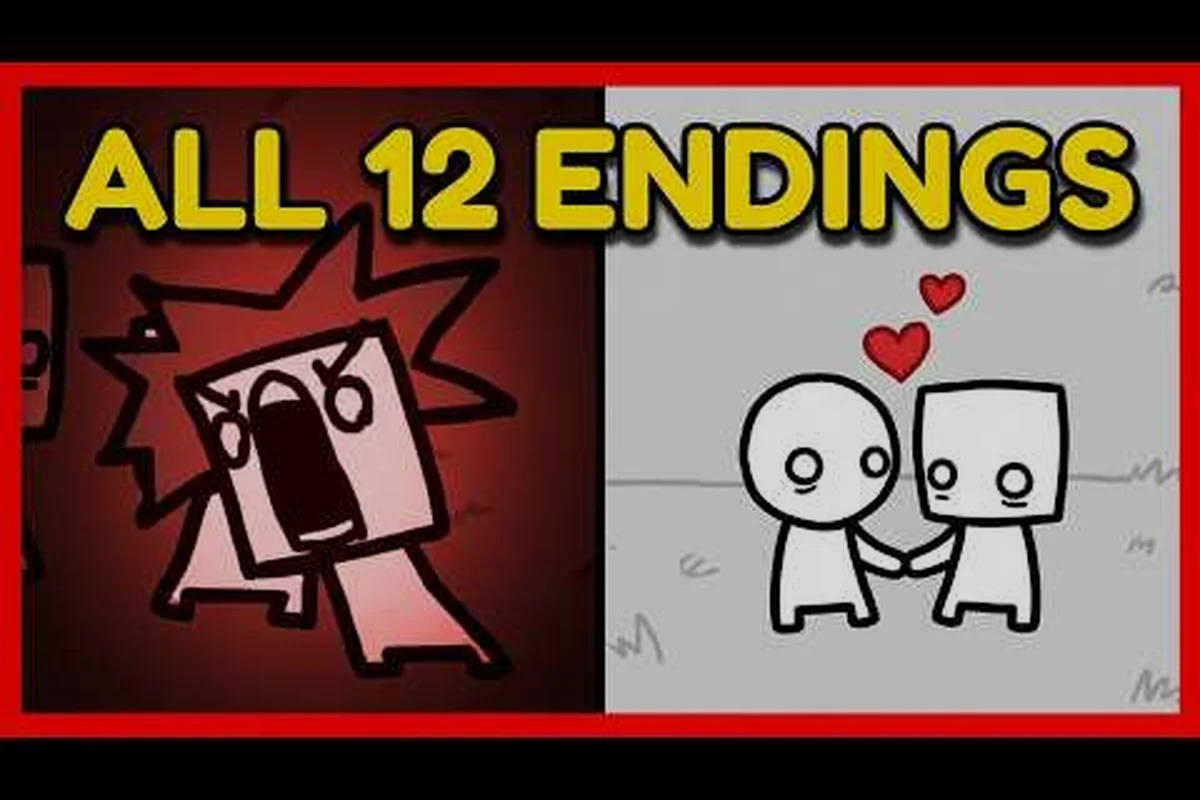
A Say Cheese Roblox first playthrough works best when you stay curious, record each decision, and avoid outside answers. This spoiler-light plan helps you understand the media-focused premise, notice meaningful choices, and finish your first run with notes worth comparing later.
Setting Up a Blind First Run for Say Cheese! Roblox
Start by separating what the official page establishes from what you still need to discover. According to the official listing, you play as a journalist hired by “Big Media” and are sent to a park to create disorder while a huge audience watches the news. The page also frames your broader purpose as deciding whether to destroy peaceful society or alter the future in a hopeful direction. Those facts provide a useful compass without revealing what happens along the way.
Before launching the game, create a private notes file with three columns: observation, decision, and reason. This format prevents the experience from turning into a nonstop click-through. It also helps you remember whether a choice came from direct game information, community reports, or your own interpretation.
Pre-run setup checklist
| Item | Why | Done |
|---|---|---|
| Close spoiler-heavy videos and discussion threads | They can reveal the structure or consequences of later choices | [ ] |
| Keep the official game page available | Its premise is documented, while detailed progression is not | [ ] |
| Open a timestamped observation log | It shows where your first run became uncertain | [ ] |
| Disable unnecessary notifications | A missed line of dialogue or visual cue may matter | [ ] |
| Decide on a personal no-save policy | Saving may interrupt the intended flow, so check in game | [ ] |
| Choose a short pause limit | The goal is observation, not a complete checklist of undocumented details | [ ] |
The pre-run checklist should remain deliberately small. The official page does not document a precise checklist for first-time players, so any claim that a particular action is required would be speculative. Use the table to protect your attention, not to invent rules.
You can also read the official description again and underline its three strongest ideas: public attention, emotional manipulation, and a consequential choice. The theme comes from the creator’s stated inspiration in Nicky Case’s We Become What We Behold, but that source only establishes the shared idea of media amplifying collective emotion. Its own structure and content should not be assumed to carry over.
If you want a broader plan for later exploration, the Say Cheese! spoiler-free playthrough tips can help you organize follow-up testing. For this run, however, resist the urge to optimize anything. Your first objective is to build an honest record of what the game presents.
What to Notice in the Opening Minutes
The opening establishes the tone more effectively than a long explanation might, so treat the first few minutes as a media-literacy exercise. Watch who appears on screen, what information is emphasized, and how the presentation tries to redirect your attention. Because the game identifies its central medium as news, every visual or spoken message may be part of how the story frames public reactions.
Do not treat a visible object as important merely because it is prominent. The official page does not document the significance of individual interactive elements, so write “noticed” instead of “found.” Likewise, when a response appears available, record what it says, how it is framed, and what feeling it creates before selecting it.
A three-layer observation method
During your Say Cheese Roblox first playthrough, treat each interaction as a three-layer observation: first record visible actions such as dialogue choices, camera movement, selectable objects, or news-image inserts; then note framing devices like close-ups, repeated characters, foreground placement, and hidden context; finally track your reaction to whether the presentation makes you sympathize, suspect, laugh, or feel pressured. This keeps a Say Cheese Roblox walkthrough guide grounded in what the game actually shows, while separating confirmed mechanics from unsupported claims about hidden story logic.
-
Surface layer: What appears, moves, or appears selectable?
-
Framing layer: What is emphasized, hidden, repeated, or placed in the foreground? 3. Reaction layer: How does the presentation encourage you to feel about the person or event? This method creates useful notes without assuming undocumented lore. For example, “the camera framing favors one person” is an observation. “This person controls the ending” would go beyond the available evidence. If you cannot verify what a mechanic does, label it not documented and check in game.
| Observation | Safe interpretation | Verification question |
|---|---|---|
| A person receives prominent attention | The presentation is amplifying that person | Who benefits from the camera’s focus? |
| A choice changes the mood | The choice affects presentation or direction | What changed, exactly? |
| A news image appears | News is part of the framing | Does it add context or distortion? |
| An option feels deliberately extreme | The game may be testing reactions | What alternative framing is available? |
Your log should capture causality without inventing it. Write “after I selected the option, the scene became more chaotic,” then separate that observation from possible interpretations. This method makes your Say Cheese Roblox walkthrough guide personal and evidence-based rather than a collection of unsupported claims.
Protect the first genuine choice
The first meaningful selection may matter less as a “correct answer” than as a baseline for comparison. Choose what your current understanding suggests, and resist the urge to reload merely because another option seems more sympathetic. If you do reload, mark the reload in your log rather than presenting the final route as your only first response.
The official description promises a choice between damaging society and changing fate, but it does not publish a decision tree or exact consequences. Therefore, treat every option as an experiment in framing. Your reason matters as much as the result because it reveals what you expected the game to reward.
This is also where Say Cheese Roblox help is most useful: it does not mean asking for the answer, but knowing what to observe when no published answer key exists. If the game supplies a restart function, use it only after recording your initial response. If it does not, check in game before assuming a restart is available.
Recording Choices Without Breaking Immersion
A good log should capture the run without turning it into a spreadsheet project. Update it after each distinct scene or important option, not after every click. A usable entry includes the approximate minute, what happened, the choice made, and a short reason. Keep the reason in plain language so you can understand it later without rereading the entire run.
Observation log template
| Minute | What happened | Choice made |
|---|---|---|
| 0–2 | Record the role, setting, and media framing exactly as presented | Select the least assumptive response |
| 3–5 | Note the first visible emotional shift or emphasized conflict | Choose based on the apparent framing |
| 6–10 | Record any repeated image, statement, or camera emphasis | Choose and give one-sentence reason |
| After each major decision | Describe the immediate presentation change | Mark reloads and changed decisions |
| Final scene | Write what the ending made you feel and what it emphasized | Do not consult outside theories yet |
Rows are templates rather than a promise about timing. The opening minutes are not documented as fixed-length segments, so do not treat the suggested intervals as a schedule. The timestamp merely provides context when you review the footage or compare with a later run.
Keep the log spoiler-resistant
A spoiler-free log records what you saw without turning speculation into fact: for each dialogue choice or scene in your Say Cheese Roblox first playthrough, note the prompt, your selected response, and the immediate on-screen result. For example, record “selected the cautious answer, then the scene continued without a visible penalty” as one observation, while treating the reason as interpretation. This structured record keeps your Say Cheese Roblox walkthrough evidence-based without revealing alternative outcomes or presenting an unconfirmed community answer as fact.
-
Observed: Directly shown or stated during your run.
-
Inferred: Your interpretation of why something happened.
-
Unverified: A possible explanation for which no evidence was recorded.
This separation protects your Say Cheese Roblox first playthrough from hindsight bias. When you later learn that another route behaves differently, you can distinguish what you understood at the time from what you know now. That difference may be more valuable than a simplistic record of “right” and “wrong” choices.
| Spoiler risk by activity | Spoiler risk | Recommendation |
|---|---|---|
| Reading the official premise | Low | Use it to understand the role and central tension |
| Watching edited community footage | High | Wait until your run is complete |
| Reading long player discussions | High | Avoid broad threads before finishing |
| Checking in-game explanations | Low | Prefer text presented during the current scene |
| Restarting to compare options | Low to medium | Record the first answer before reloading |
| Asking another player | Medium | Ask for hints, not a route solution |
Community videos as of 2026-10-31 discuss multiple outcomes; the creator has not published a list, a count, or any outcome names, so treat them as unconfirmed. That distinction matters because community material can still be useful after the run for comparison, but it cannot supply a trustworthy answer key beforehand.
When to Pause and Re-read the Official Description
Pause whenever your interpretation becomes more dramatic than the evidence. The official listing provides a compact framework: you are a journalist, the setting is a park, your assignment is to spread chaos, and billions will watch the news. The final choice asks whether to destroy a peaceful society or change fate to bring hope. These details can help you interpret a scene, but they do not identify every person, objective, or branch in the game.
Create a three-column evidence card whenever uncertainty rises. The first column should quote or paraphrase only what you directly observed. The second should contain the official description relevant to that moment. The third should hold your current interpretation. Leave the fourth possibility blank: “I need more evidence.”
Use the description as a question generator
The premise naturally raises useful questions without providing answers. Does the scene show news influencing an audience? Does it show one person’s emotion spreading to others? Does your choice protect someone, exploit attention, or redirect the public mood? These questions help you analyze the media theme without pretending to know details the creator has not documented.
| Question | What the official premise supports | What still needs verification |
|---|---|---|
| What is my role? | A journalist hired by a large media organization | The limits of that role during the run |
| Where does the story take place? | A park | How the setting changes across scenes |
| What is the intended impact? | Disorder and panic spread to a watching audience | How each choice contributes to that effect |
| What is the larger conflict? | Damaging peaceful society versus changing fate toward hope | The exact choices and consequences |
You can verify creator identity through the owner profile linked from the group page. This matters when researching a first playthrough because unrelated pages may use the same name. Checking ownership helps you separate official context from third-party commentary without relying on an unverified fan page.
The official description should guide attention, not script your behavior. If it mentions panic, notice how panic is represented; if it mentions hope, notice whether that concept appears directly or only through implication. Do not assume that one abstract idea maps neatly to one selectable option, because the page does not document such a mapping.
Ending a First Run Cleanly
When the run concludes, resist the immediate urge to search for explanations. First, close the game and write a three-minute reaction. Record your final feeling, the strongest image, the choice you remember most clearly, and the question that remains. This creates an untouched impression before outside material can reshape it.
Then complete the observation log and label each major decision as confident, uncertain, or reload-driven. This creates a clearer record than simply saying you selected the final option. It shows which decisions came from your interpretation, which followed explicit instructions, and which changed only because you changed course.
First-run debrief
For a genuine Say Cheese roblox first playthrough debrief, log each dialogue choice, camera cut, and news-framed reaction as it happens instead of relying on a remembered “best ending.” For example, note whether a response was made before a timer expired, then compare the scene that followed with the presentation you expected; this makes later replay tests cleaner than labeling the first result as canon or an optimal route.
-
Which choice did you understand most clearly during the run?
-
Which moment changed the mood of the presentation?
-
What did the camera or news framing emphasize?
-
Did your expectations match what happened?
-
Which question would you investigate in a second run?
-
Which details are confirmed by the game, and which remain your interpretation?
The official snapshot on October 31, 2026, listed roughly 3.96 million visits, 13,403 players, and 49,747 favorites. These figures show public interest, but they do not reveal the best route or validate a particular choice. Likewise, the creator’s release date was October 19, 2026, so a first run may contain changes made after launch. Record what you personally encountered rather than treating early impressions as permanent rules.
| Debrief category | Write this | Avoid this |
|---|---|---|
| Immediate reaction | “The final scene emphasized public reaction” | “The creator clearly intended one meaning” |
| Choice reason | “I chose it because it matched the framing” | “It was the hidden best option” |
| Unclear moment | “The purpose is not documented” | Inventing a purpose |
| Comparison note | “A later run could test the opposite response” | Promising a route before testing |
If you decide to replay, the first-time replay guide can help separate curiosity from repeat viewing. Treat the second run as an experiment: change one decision at a time and keep the same observation format. That approach produces better information than changing several choices at once, because you can better understand what each decision changed.
Extending the First Run Without Turning It into a Spoiler Search
The best extension is not a longer list of outcomes; it is a more precise comparison method. After completing the first run, preserve the raw log before editing it. Then add a second column for later observations. This creates a record of expectation versus experience and makes future research easier.
Start with the areas the official page actually emphasizes. Compare how your choices affected disorder, public attention, and hope. If those ideas appeared in ways you did not understand initially, the question becomes “What did the game show?” rather than “Which answer is best?” That keeps the analysis grounded in evidence.
Community material can now be checked selectively. Look for recurring descriptions of specific scenes or response patterns, but mark them as community reports as of 2026-10-31 unless the official page confirms them. Do not treat repeated community claims as creator documentation, especially when the creator has not published a comprehensive explanation.
For a shorter second pass, the quick Say Cheese! guide can complement your notes. The aim is not to consume the entire experience quickly; it is to revisit a scene with a sharper question. For example, you might test whether your original reading of the camera framing changes when you pay closer attention to audience reactions.
A four-round comparison method
Use four compact rounds rather than an endless checklist: establish a baseline by recording visible objective cues, dialogue prompts, and character reactions during your first Say Cheese Roblox playthrough; then test one variable per round, such as an early dialogue choice, an NPC interaction, or the framing of a scene. Comparing those runs helps distinguish repeatable game behavior from assumptions that may come from community lore.
-
Replay round: Revisit the opening and record only what you now notice.
-
Choice round: Change one early decision while leaving later behavior consistent. 3. Framing round: Focus on who receives attention and how emotion is presented. 4. Verification round: Separate confirmed behavior from community interpretation in your notes. This method also makes your Say Cheese Roblox tutorial planning more useful. A tutorial should explain what a player can observe and why a decision matters, not simply announce that one response is correct. When another mechanic remains unclear, the safe phrase is: the official page does not document this; check in game.
A Practical Decision Framework for Say Cheese! Roblox Players
Use a four-question framework whenever a choice appears. First, ask what the scene explicitly communicates. Second, ask who or what benefits from the framing shown. Third, consider how your choice changes the immediate mood or public presentation. Fourth, decide whether you want to test the choice or preserve your first instinct.
This framework is not presented as an official rule system. It is a thinking aid for a narrative experience whose public information is intentionally sparse. It can also reduce the pressure to seek a universal “best” answer, because the game’s documented premise centers on interpretation, emotion, and responsibility rather than a published optimization chart.
| Decision state | Best next move | Record |
|---|---|---|
| The choice text is clear | Follow your first reading | Why that reading felt strongest |
| The framing is confusing | Observe the wider scene | Who receives attention |
| Your reason is emotional | Pause and name the emotion | Whether the mood shifted afterward |
| Outside information conflicts with what you saw | Trust your recorded evidence for now | Mark the conflict as unverified |
| You are only reloading to escape discomfort | Complete the current scene once | Why the discomfort arose |
The framework also offers a practical answer to Say Cheese Roblox what to do when you are stuck. Observe the presentation, record the available response, and choose based on the question you want the game to examine. Do not assume that emotional discomfort means a choice is wrong. It may simply reveal how strongly the framing is working.
Keep your final notes factual, personal, and spoiler-conscious. You should be able to explain the run without a broad outline of later scenes, and another player should be able to understand why you selected each response without needing the answer. That is the strongest finish to a first playthrough: informed curiosity rather than a spoiler checklist.
Frequently Asked Questions
How should I prepare for a Say Cheese Roblox first playthrough?
Close spoiler-heavy videos, open a timestamped notes file, and focus on the official premise: you are a journalist assigned to create disorder in a park while a mass audience watches the news. Record observations before choosing, and do not assume that an intense reaction identifies a correct route.
Is there a spoiler-free way to understand the choices?
Yes. Use the framing of each scene rather than searching for a route solution. Write down what is emphasized, who receives attention, and how the mood changes after a response. The creator has not published a complete choice guide, so detailed outcomes remain undocumented beyond what you observe in game.
Should I replay a choice if the first result feels disappointing?
Record the original selection and reason before restarting. A reload can show whether the presentation changes, but it cannot make your first reaction disappear from the comparison. If the run offers no restart option, check in game rather than assuming one is available.
Can community videos help with a Say Cheese Roblox walkthrough guide?
Use them only after your first run, and separate observations from claims. Community videos as of 2026-10-31 discuss multiple outcomes; the creator has not published a list, a count, or any outcome names, so treat them as unconfirmed. Their value is comparison, not authority.
What should I record before finishing my first playthrough?
Capture your final reaction, the most memorable framing, your main decisions, and the reasons behind them. Mark each entry as observed, inferred, or unverified. This creates a spoiler-resistant record and gives any later replay a clear question to investigate.