
Whether Say Cheese! Roblox is worth playing cannot be settled by a listing alone, so this page reasons from official wording captured on 2026-10-31: a journalist hired by “Big Media,” a park, a news audience, and a stated choice between destruction and hope.
What Say Cheese! Is, According to Its Own Page
Say Cheese! is a Roblox adventure and story experience built around a media premise: the player is a journalist hired by Big Media and sent to a park to cause chaos while billions watch the latest news. Its published framing asks the player to choose between destroying a peaceful society or changing fate to bring hope. That combination suggests a compact social satire rather than a conventional collection game.
The camera reference in the title and opening premise reinforces the idea that attention is part of the subject. However, the official page does not document a camera system, scoring method, branching structure, or any other specific interaction. Readers should therefore treat the available description as a clear theme statement, not a complete mechanics manual.
This distinction matters when asking whether Say Cheese! Roblox is worth playing. The published premise can predict tone, perspective, and likely session length, but it cannot establish what happens after every decision or how much variety a second visit provides. Those details are not documented, so the safest evaluation method is to compare the stated premise with your own appetite for short, choice-driven satire.
| Published element | What it suggests | What remains not documented |
|---|---|---|
| Journalist working for Big Media | A media-focused satirical frame | The journalism interactions |
| A park as the setting | A contained, centralized location | The layout and routes |
| Spreading chaos and panic | Destructive choices may shape the experience | Exact choices and consequences |
| Billions watching the news | Public attention drives the concept | How viewers influence play |
| Destroy society or bring hope | A stark moral fork | The routes connected to either side |
The official description also says the experience is inspired by We Become What We Behold at the level of its theme: media amplification and collective emotion. That comparison is useful for mood, but it cannot be used to infer borrowed characters, sequence structure, or consequences. Anyone seeking the basic operating details can use the Say Cheese! beginner guide for a practical starting point.
The core evaluation question
Rather than asking whether the premise is objectively good, ask whether you want to inhabit it. Media-driven panic may be amusing if you enjoy sharp social commentary and decisions that reveal consequences. It may feel thin if you need substantial exploration, varied challenges, or a generous collection of activities.
The page lists a Minimal maturity rating, which signals broad accessibility rather than mature subject matter. It was released on October 19, 2026 and last updated on October 31, 2026. That recent release window also means the current public description may be more reliable than older impressions.
What the Rating Snapshot Suggests
The public page data points to substantial early interest. As of 2026-10-31, the experience had 3,955,237 visits, 13,403 players, 49,747 favorites, and 12,154 likes against 1,369 dislikes. That produces a positive rating of roughly 90%, although the calculation is only a snapshot and may change as more people play.
| Metric | Value | As of |
|---|---|---|
| Visits | 3,955,237 | 2026-10-31 |
| Players | 13,403 | 2026-10-31 |
| Favorites | 49,747 | 2026-10-31 |
| Likes | 12,154 | 2026-10-31 |
| Dislikes | 1,369 | 2026-10-31 |
| Group members | 4,810 | 2026-10-31 |
| Maximum server capacity | 12 | 2026-10-31 |
These figures make the title of Say Cheese! Roblox worth playing worth investigating. A high positive ratio and a large visit count suggest that the experience is not resonating with only a tiny audience. They do not prove depth, longevity, or replayability, because no official page currently provides those measurements.
The favorites total is also worth separating from the likes total. A favorite can be saved before playing, while a like normally follows a visit. The difference therefore suggests meaningful pre-interest without establishing how many favorites later become active players.
Reading the numbers without overclaiming
A 90% positive rating is encouraging for a new release, but it is not a quality score on its own. Reviewers may be reacting to an attractive premise, a short experience, or their own preferences. The page does not document a formal review rubric, so treating the ratio as proof of depth would be a mistake.
The server-capacity figure of 12 is also easy to misread. It describes capacity per instance; it does not establish that the experience was designed around teams or coordinated sessions. The official page does not document a multiplayer mode, so check in game before assuming that another person is required or especially useful. For platform-level context, the Roblox page on Wikipedia explains the wider account, device, privacy, and moderation systems that apply to experiences on Roblox. Those are platform facts, not evidence about anything special in Say Cheese!.
The fresh-release caveat
The research snapshot comes only twelve days after release, which limits the usefulness of long-term conclusions. A game launched on October 19, 2026 may still have its public description refined, and the 13,403-player count may represent a launch surge rather than steady attendance. Those figures are useful for measuring interest, not predicting permanent popularity.
That makes a one-session test especially sensible. If the central idea lands for you, the release age matters less than your appetite for the premise. If it feels shallow, future additions could help, but no future scope is documented, so it would be speculative to treat that possibility as a promise.
Player Types That Fit a Short Satire
The strongest case for Say Cheese! Roblox worth playing comes from players who enjoy compact experiments about media, public reactions, and moral framing. The documented premise is sharp enough to be immediately understandable, while the contained park setting suggests a focused experience rather than an sprawling virtual world.
The journalist role is the clearest fit signal. If you enjoy role-playing someone whose actions become public spectacle, the premise offers an immediate imaginative hook. Players who dislike simulated responsibility, social judgment, or morally uncomfortable choices may find the same framing less welcoming.
| Player type | Fit | Why |
|---|---|---|
| Short-session story lover | Strong | The official framing suggests a focused adventure and story premise |
| Social satire fan | Strong | The role centers on journalism, public attention, and collective panic |
| Choice-driven role-player | Strong | The premise explicitly emphasizes a choice between two broad outcomes |
| Completion-focused explorer | Uncertain | The official page does not document extensive locations or activities |
| Competition-focused gamer | Weak | No competitive format is documented on the official page |
| Long RPG campaign fan | Weak | Nothing published establishes a long campaign structure |
| Casual browser | Conditional | Accessibility looks promising, but the exact game length is not documented |
A second good fit is the player who enjoys replaying an experience mainly to compare personal choices. Replay value can exist without a large collection of systems: repeated decisions may produce different impressions or story outcomes. Yet the creator has not published a list, count, or names for those outcomes, so a player should not buy into the idea solely because of online claims.
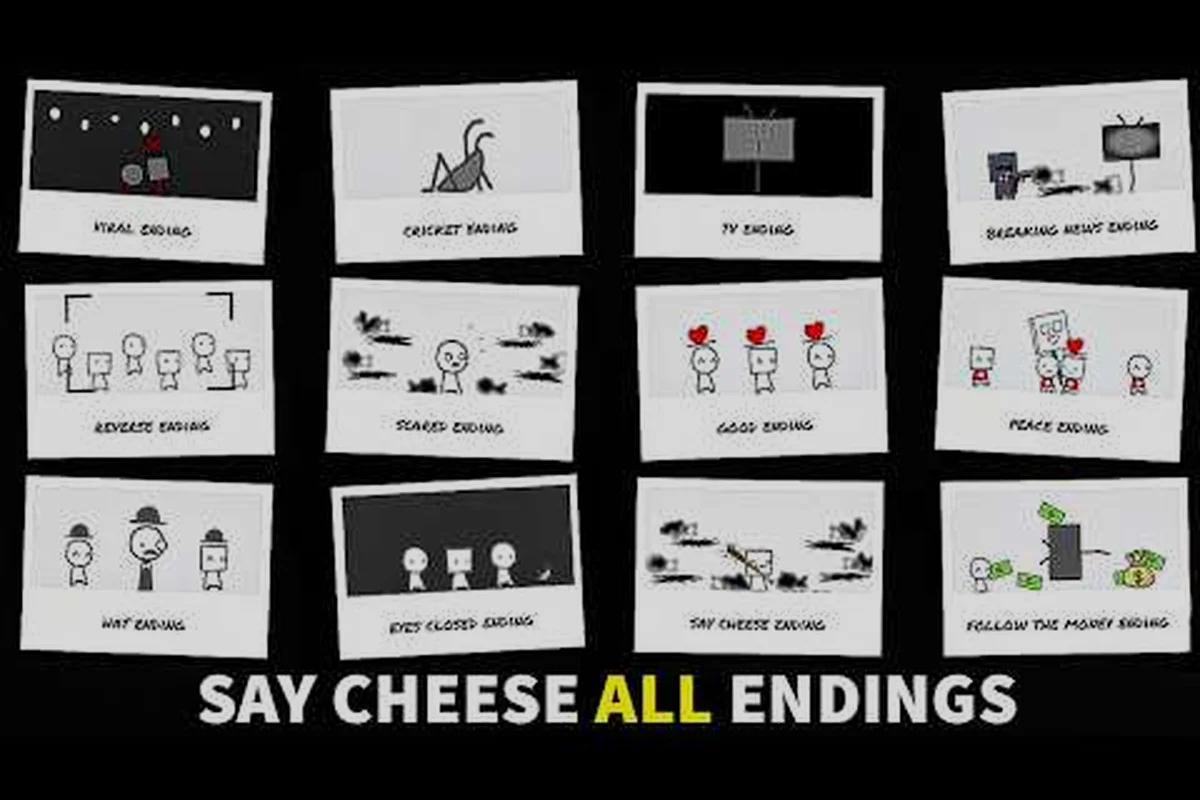
Community videos dated as of 2026-10-31 discuss multiple endings for Say Cheese, but the creator has not published a confirmed ending list, total count, or official ending names. Treat those claims as unconfirmed rather than using them as a checklist for replay value. During one session, note whether the journalist premise, Big Media framing, and park setting produce distinct outcomes; if no clear ending appears, that alone does not prove the game lacks one, because the public documentation simply does not establish how many routes exist. This makes experimentation appealing for players who value discovery, but it also creates uncertainty for anyone who wants a clearly stated number before starting.
Decision-driven but not progression-driven
This appears designed primarily for decision-driven reflection, based on the official description, rather than documented progression. The player is cast into a professional role, sent into a public space, and told that enormous audiences will watch what happens. That combination is more thematic than mechanical, so satisfaction depends on whether the execution supports the idea. The broadest guide to the documented setup is available in the first-time player walkthrough, while replay expectations can be examined separately. Neither source should be read as authority for details the creator has not documented.
Players who like a quick judgment call
A compact experience can fit between longer sessions better than a demanding project. It can also serve as a social test: it is easier to recommend a short, premise-driven game than one requiring a large time commitment. The catch is that the official page does not give a verified completion time, so “short” describes the shape of the published concept more confidently than it describes every minute of play.
The most suitable player is someone open to discovering the experience firsthand rather than consuming a complete walkthrough first. In Say Cheese Roblox, uncertainty makes room for practical judgment: record what happens during the cheese-related challenge, note which clues or outcomes appear, and compare that run with the next one instead of assuming every ending works the same way. The mystery surrounding different outcomes may be part of the appeal, but its size remains unverified, so replay value should be judged by what each attempt reveals rather than by a confirmed number of endings.
Player Types That Will Bounce Off
The most likely mismatch is a player who expects a large Roblox sandbox with many places to visit, activities to repeat, or systems to master. The official page presents a narrow role and location rather than a catalogue of features. If your enjoyment depends on constant activity generation, the limited published scope may feel thin even if the satire itself works.
Another mismatch involves players who require transparent rules before committing time. The page establishes media as the central conflict, but exact consequences, branching, and route structure are not documented. A cautious decision-maker may therefore find the evaluation process less satisfying than the game itself.
| Concern | Published evidence | Better way to approach it |
|---|---|---|
| Concern about limited content | Only a journalist, a park, and a moral choice are documented | Test whether the short premise satisfies you |
| Concern about vague progression | No progression method is documented | Do not assume advancement beyond the premise |
| Concern about replay depth | Community reports (as of 2026-10-31) discuss multiple outcomes | Verify them during your own session |
| Concern about technical complexity | Input details are not documented | Check in game and adjust your setup |
| Concern about multiplayer design | Maximum capacity is 12, but no format is documented | Treat it as a capacity figure, not a feature promise |
Players sensitive to how news, crowds, or social panic are portrayed may also want to inspect the experience themselves rather than rely on genre labels alone. A Minimal maturity rating does not replace personal judgment, and the page’s short description does not guarantee that every joke or implication will land comfortably.
Sizing Up Promises Against Content
The positive page rating may encourage extravagant expectations. Yet the early launch snapshot cannot tell you whether the experience supports repeated visits, how many distinct outcomes exist, or whether any progression remains after the first run. Treat those as verification items, not established features.
This is where the central question behind Say Cheese! Roblox worth playing becomes practical. If you want a lengthy adventure, the evidence is weak. If you want a focused satire whose impact depends on your choices and the presentation of public attention, the premise is promising enough to test directly.
Avoid beginning with a checklist copied from another player. Instead, record your reaction at three moments: after learning the role, after your first consequential decision, and after reaching what the game presents as its conclusion. Those notes provide a more honest basis for evaluating replay value than community speculation.
How to Judge It Yourself in One Session
Use a short session as a controlled test. The goal is not to uncover every secret or impose a completion timer. Instead, observe whether the core premise feels clear, whether decisions feel meaningful, and whether the experience matches your expectations for length.
Community videos dated 2026-10-31 mention several possible endings for Say Cheese!, but the creator has published no confirmed ending list, total count, or named outcomes. Treat those videos as leads for your own test, not a verified route guide: note the final scene, dialogue, and whether your choice between destroying society and bringing hope changes the ending or only alters dialogue and later scenes. The page’s branching-story description does not establish a conventional binary ending system. This matters when judging whether Say Cheese! is worth playing, because replay value should be measured from changes you personally observe, rather than an unverified community claim.
Start by reading the official premise before pressing play. Identify three anchors: you are a journalist, you are working for Big Media, and your actions unfold in a park before a massive audience. The exact controls and interactions are not documented on the public page, so begin cautiously and check in game if the interface is unclear.
Next, make one decision slowly and observe what changes. Do not assume every branch is permanent or that the page’s moral fork works as a conventional binary ending system. The creator has not documented the consequences, and the evaluation should focus on the experience you actually encounter rather than a predesigned route chart.
| Expectation | What the page says | Adjustment |
|---|---|---|
| A complete adventure | Genre is listed as Adventure / Story | Expect a focused experience, not a confirmed campaign length |
| A journalism simulation | The player is hired as a journalist | Expect media to frame the role, without assuming office mechanics |
| A large open playground | The setting is a park | Do not assume a large map or multiple destinations |
| A branching story | The choice is between destroying society and bringing hope | Judge the actual consequences in your session |
| A long progression system | Nothing is documented | Do not expect a confirmed progression loop |
A practical evaluation checklist
After one playthrough, answer these questions in writing rather than relying on a single overall impression. For example, note whether the journalist scenario offered enough interaction and story progression to justify its runtime, and whether the ending suggested additional routes worth replaying. This matters when judging whether “Say Cheese Roblox” is worth playing, because game length, replay value, and beginner mistakes should be evaluated from your own session rather than from online claims alone.
-
Did the journalist role feel meaningful within the documented scenario?
-
Did decisions produce a clear response from the setting or story?
-
Did the ending of your session leave you curious about another route?
-
Did the experience respect your time, or did it feel padded?
-
Was your interest driven by the theme, the execution, or merely curiosity about online claims?
-
Would you recommend it based on the experience you observed?
A first-time walkthrough is most useful when you record the journalist scenario’s major checkpoints, dialogue choices, and ending as they happen, then compare that session with the common-mistakes guide afterward. This avoids turning undocumented solutions into part of your initial evaluation of the game length. It also gives you concrete evidence for replay value: for example, if one route exposes clues that another route does not, the extra play depends on meaningful scenario variation rather than simply extending the runtime.
Measuring length and replay value without a false timer
The requested Say Cheese! Roblox how long question has no verified numerical answer in the published information. The game length is therefore best measured from your own session rather than claimed from an external estimate. Record the start time, note the point when the experience no longer holds your attention, and separate that from the time you voluntarily spend exploring alternate choices.
That distinction makes the game length question much more useful. If the core story occupies a compact portion of your session while the rest comes from experimenting, it may have decision-driven replay value without requiring a long main run. If the entire experience ends abruptly and offers nothing meaningful to reconsider, it may be better as a one-time story than as a repeatable game.
The beginner mistake that distorts the verdict
The most damaging beginner mistake is entering with a fixed theory about how many outcomes the game contains. Community material can create expectations that the official page cannot confirm. A better approach is to separate three layers of judgment: premise, execution, and personal taste.
The premise is documented and unusually easy to summarize. The execution must be observed in play. Personal taste determines whether a satirical story earns a second visit. This framework gives Say Cheese! Roblox worth playing a defensible answer rather than a score based on hype.
A Practical Verdict for Different Expectations
Say Cheese! is worth trying if your priority is a compact, theme-driven Roblox story with a journalist at its center and a stark choice between disruption and hope. The official page supports that conclusion through its Adventure / Story classification, the media premise, and a strong early positive rating. It does not support claims about extensive depth or a guaranteed number of outcomes.
It may not be worth your time if you need a large amount of repeatable activity, transparent long-term progression, or a heavily explained set of routes. Those features are not documented, and the early snapshot cannot establish them. The game-length analysis offers a useful companion for readers who want to evaluate pacing with realistic expectations.
The player-fit test is straightforward: begin with one session and compare the Adventure / Story premise against what you wanted from the game. If the journalist-centered satire and its disruption-versus-hope choices feel focused and coherent, Say Cheese! may suit you; if you expect long-term progression, a large replayable sandbox, or clearly explained routes, the limited official information gives you no reason to assume those features exist.
| If you prioritize... | Recommendation |
|---|---|
| A compact satire with a distinctive media premise | Try it |
| Learning through your own decisions | Try it |
| A visually or mechanically complex sandbox | Check in game before committing |
| A long progression campaign | Verify expectations first |
| Guaranteed replay content | Do not rely on community claims alone |
Ultimately, this experience is best evaluated as an authored idea with uncertain breadth. Its public reception and premise make it worth a trial, while its limited official documentation argues against making grand promises. Play one session, observe the quality of the choices and presentation, and then decide whether your curiosity survives contact with the actual experience.
Frequently Asked Questions
Is Say Cheese! Roblox worth playing for short sessions?
It appears promising for short sessions because the official page frames a focused journalist scenario in a park with a clear moral choice. However, the exact game length is not documented, so you should judge one playthrough personally rather than assume a precise completion window.
How long does one playthrough of Say Cheese! Roblox take?
There is no verified duration on the official page, and community timing claims may reflect different routes or play styles. Measure your own run from the opening to its conclusion, then note how much additional time you spend experimenting with choices.
Does Say Cheese! Roblox have strong replay value?
Replay value depends on how much your decisions change the experience and whether you want to compare outcomes. Community videos as of 2026-10-31 discuss multiple endings, but the creator has not published a list, a count or names, so confirm the possibilities yourself.
What beginner mistakes should I avoid in Say Cheese! Roblox?
Avoid assuming a fixed number of outcomes, mistaking the server-capacity figure for a multiplayer feature, or expecting a large progression system. The official page does not document those details, so observe the actual controls, consequences, and pacing before judging the experience.
Is Say Cheese! Roblox suitable for players who dislike story choices?
Probably not as your main choice. The published premise depends on a major decision between destroying society and bringing hope, so players seeking a systems-driven experience may want to verify the in-game content before investing substantial time. Judge it by the branching path around that moral choice: if replaying the journalist scenario with different decisions feels meaningful, it may be worth a trial; if you want deeper progression, unlockable systems, or varied challenges, the available information suggests limited appeal.