
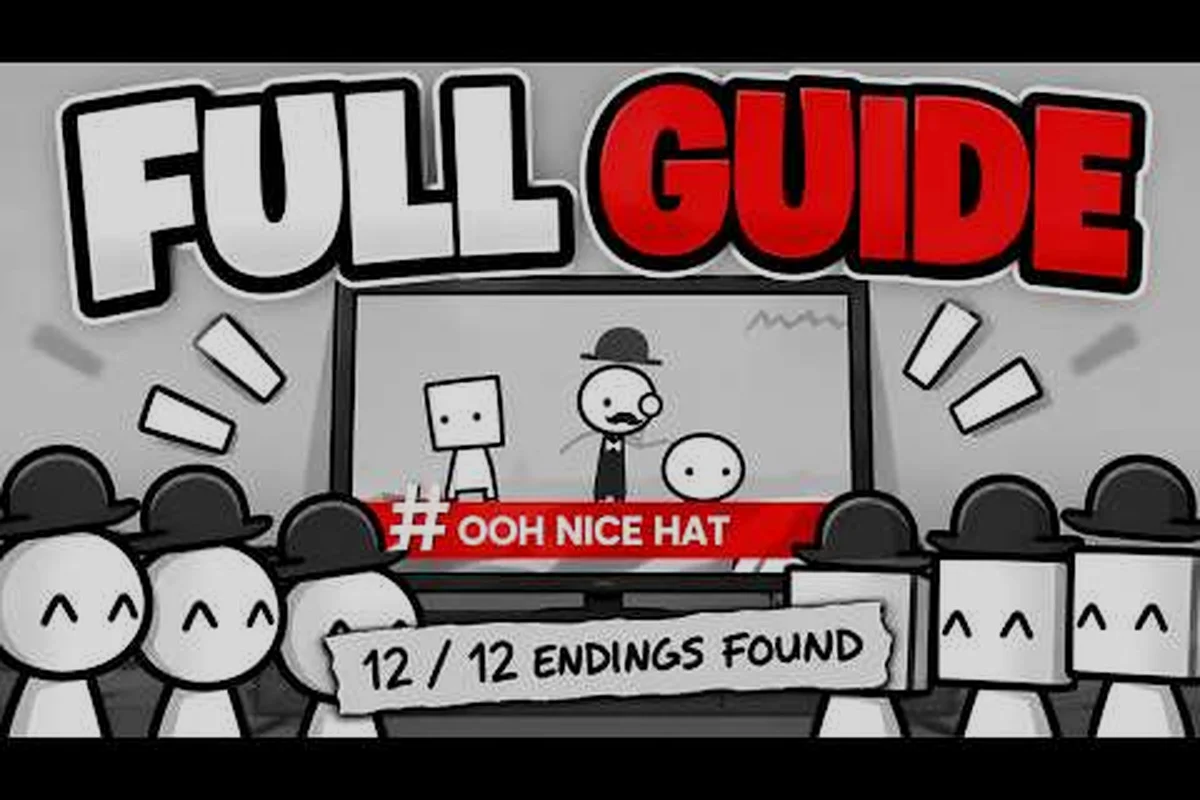
Say Cheese! Roblox news game opens with a simple distinction: its story critiques media influence rather than operating as a literal news system. That framing shapes the satire, because players encounter the gap between a breaking event and the edited spectacle built around it. A chaotic incident can become more compelling once framing, attention, and public reaction reshape it, revealing how a news game can expose the incentives behind “breaking news” without delivering a conventional headline simulation.
The Say Cheese! Roblox satire game uses a camera, a public audience, and a consequential choice to examine collective emotion. Learning where documented theme ends and speculation begins helps you appreciate that satire without mistaking it for a conventional gameplay guide.
The News Theme in the Official Description
The official Roblox page establishes the premise clearly: you play as a journalist hired by “Big Media,” travel to a park, and are instructed to create disorder and panic while a massive audience watches the latest coverage. The page then frames the central choice as destroying a peaceful society or changing its future in a hopeful direction.
That premise makes the Say Cheese! Roblox news game more than a game with a reporter in it. The reporter does not appear to be an objective observer. Instead, the player occupies the role of someone employed to manufacture attention, which invites questions about incentives, framing, and the public consequences of sensational behavior.
The documented framing
The creator’s page establishes the journalist role, park setting, chaos objective, and choice between destruction and hope, but its wording does not verify every in-game detail. That distinction matters for Say Cheese because the Big Media framing can establish the satire’s premise while the specific broadcast tool, number of endings, and consequences of each choice still require direct in-game observation.
| Statement | Type | Allowed wording |
|---|---|---|
| The player is a journalist employed by Big Media | Officially documented theme | The official page assigns the player this role. |
| The destination is a park | Officially documented setting | The journalist is sent to a park. |
| The player should spread chaos and panic | Officially documented objective | The premise asks the player to create disorder. |
| Billions of people watch the coverage | Officially documented audience frame | The official description presents the act as a major public spectacle. |
| The player chooses between destruction and hope | Officially documented binary framing | The description ends with a consequential choice. |
| A specific broadcast tool exists | Not documented | The official page does not document this; check in game. |
| The story contains a fixed number of outcomes | Not documented | The creator has not published a count or list. |
This does not mean the game lacks depth. Rather, its depth comes from interpreting the roles and pressures described on the page. A broader discussion of its media framing appears in the site’s analysis of media criticism and news satire, which can help explain the story without pretending that undocumented details are official.
A satire game, not a journalism simulator
Calling Say Cheese! a journalism simulator would overstate the documentation. A media-satire premise is more accurate because the page explicitly frames the player as an agent of “Big Media” whose job is to generate spectacle. The player is not simply gathering facts and reporting responsibly.
| Framing | What it emphasizes | Appropriate conclusion |
|---|---|---|
| Journalism simulator | Reporting procedures, accuracy, and verification | Too specific without in-game evidence |
| News-themed story | Media, journalists, and an audience | Supported by the official premise |
| Media satire | Exaggeration, attention, and social consequence | Strongly supported by the premise |
| Interactive documentary | Evidence gathering and factual reconstruction | Not supported by the published description |
| Live broadcast tool | A particular operating interface | Not documented; check in game |
The distinction matters for reviews and guides. If the experience earns praise for its writing, framing, or visual presentation, that is different from praising the depth of a reporting system. It is also different from judging the implementation of news-production tools that the official page never claims to exist.
Reading the Premise as a Reporter
The published premise establishes a compact chain of cause and effect: Big Media employs a journalist, the journalist is sent into a public park, the journalist is expected to create chaos, and the resulting spectacle reaches an enormous audience. The final choice asks what the player will do with that influence.
The creator also says the experience is based on We Become What We Behold, but only the shared thematic inspiration is documented. That source concerns how media can amplify group emotion, which fits the focus on public reactions. Its specific structure should not be used to fill gaps in Say Cheese!’s own documentation.
As of 2026-10-31, the Roblox listing identifies the experience as an Adventure/Story title with a Minimal content label and a server capacity of 12. The page also showed 3,955,237 visits, 13,403 players, and 49,747 favorites. These figures are a dated snapshot rather than permanent measurements, and the capacity figure describes the server rather than a documented cooperative feature.
What Billions Must Watch Actually Means
The phrase about billions watching the latest news is the most provocative part of the official premise. It functions first as a scale device: one person’s conduct is framed as something that will immediately become a public event. It also creates a causal chain in which private or local action becomes collective spectacle.
However, the line does not establish a literal live broadcast, a measurable audience, or a simulation of news channels. Those are possible readings, but the official page does not document them. If a video appears to show an interface for coverage, treat it as something you can observe in the experience rather than as a system confirmed by the creator.
Attention as a pressure
The premise asks players to imagine what happens when a media organization rewards dramatic behavior. A journalist who creates chaos may receive attention, while quieter conduct risks being ignored. That conflict gives the satire its basic question: How does a person behave when an institution frames spectacle as valuable?
| Pressure | Characteristic effect | Satirical question |
|---|---|---|
| Enormous audience | Actions feel consequential | Does visibility change personal responsibility? |
| Employer influence | The journalist has an agenda | Can institutional incentives shape judgment? |
| Public setting | Disorder cannot be isolated | How does one action affect a group? |
| Hope versus destruction | The choice is framed as binary | What is lost when choices are simplified? |
| Camera presence | The player is visibly observed | Who benefits from being watched? |
The player’s camera connection is especially relevant because the opening tells you that you are on camera. The creator’s description uses that idea to place the player inside the spectacle rather than outside it. Yet the official page does not specify a separate recording device, so the safest reading is symbolic: visibility is central to the premise even though the exact operation is not documented.
Satire versus literal reporting
A useful test is to ask whether a claim describes the subject matter, the story’s argument, or a detailed operating rule. “The story concerns media influence” describes the subject. “The player chooses how the news frames public fear” describes a plausible interpretation. “Pressing a specific control selects a specific broadcast format” describes an operating rule that must be demonstrated in game.
| Claim | Best classification | Verification approach |
|---|---|---|
| The story criticizes sensational journalism | Theme | Supported by the employer, objective, audience, and choice |
| The player creates a spectacle | Theme | Supported by the instruction to spread chaos and panic |
| The audience watches in real time | Possible interpretation | Check in game |
| News channels react mechanically | Mechanic claim | Not documented on the official page |
| The player chooses what facts appear | Mechanic claim | Not documented; check in game |
| Public mood changes through a formula | Mechanic claim | Not documented; check in game |
That distinction makes coverage of the Say Cheese! Roblox satire game more useful than repeating dramatic claims without support. The documented employer objective, instruction to spread chaos and panic, and player choice to shape the framing establish themes about media influence and spectacle creation. By contrast, claims about real-time audience viewing, mechanical news-channel reactions, fact selection, or a public-mood formula remain mechanic claims that require direct in-game observation before being presented as confirmed features of this single-player experience.
Theme Is Not a Mechanic: A Worked Example
Suppose a player says, “I controlled what everyone saw on the news and changed their reactions.” The sentence may summarize a strong moment, but it packs several claims into one statement. Separating them reveals which parts come from the premise and which require evidence.
A claim-breaking exercise
Start with the observation: the player is on camera. Then connect it to the official objective: the player is sent to spread chaos and panic. Next, identify the documented consequence: billions are imagined to watch the latest news. Finally, separate the interpretation that the player can directly control public perception from the documented premise that the player’s actions are broadcast. This does not diminish the experience. Strong satire can operate through implication rather than elaborate controls. Separating the layers simply makes the analysis sharper: readers can appreciate the story’s argument without treating every imagined interaction as a named feature.
| Layer | Example claim | Classification | Safe explanation |
|---|---|---|---|
| Role | The player is a journalist | Officially documented | The official page assigns this profession. |
| Instruction | The player creates panic | Officially documented objective | The journalist is sent to cause chaos. |
| Audience | Billions watch | Officially documented framing | The premise emphasizes a huge public audience. |
| Control | The player chooses what the audience believes | Mechanic claim | Not documented; check in game. |
| Consequence | Society changes according to the player’s choice | Officially documented framing | The premise offers destruction or hope. |
A worked evaluation
Imagine a video showing a player panic nearby characters and then a visible scene change. Three defensible conclusions are possible. First, the event demonstrates the game’s documented instruction to create chaos. Second, nearby characters may be reacting within the experience, although that behavior is not documented on the official page. Third, the scene change may support the story’s larger theme about collective emotion without proving a fixed rule.
The careful wording would be: “The sequence fits the official premise because the player is trying to produce disorder. The exact response from characters is not documented on the creator’s page, so it should be verified directly in game.” That sentence remains useful without overstating what the official description proves.
Community videos (as of 2026-10-31) discuss multiple endings; the creator has not published a list, a count or any ending names, so treat them as unconfirmed. This is a useful example of disciplined reporting: a third-party video can establish that a topic is being discussed, but it cannot convert an unverified claim into an official fact.
The same test for a single-player label
The Say Cheese! Roblox single player phrase can also create confusion. The official listing says the experience is a story title and gives a maximum server size of 12, but it does not explicitly promise that every session is designed for one person. That means “single player” may be a practical description if the official page supports it, yet it should not be expanded into a claim about session rules or multiplayer features.
| Possible statement | Verdict | Reason |
|---|---|---|
| The server can hold up to 12 players | Documented | This is the listed maximum capacity. |
| The experience is designed only for solo play | Not established | The page does not state a solo-only design. |
| A player can experience the story alone | Plausible, but verify | Check in game and on the current page. |
| It contains cooperative systems | Not documented | Do not infer them from capacity. |
| It is the same as a conventional journalism game | Misleading | Its documented premise is media satire. |
The general Roblox platform supports different forms of access, but platform behavior does not fill gaps in an individual experience’s design. Use platform-level knowledge only for matters such as account settings or device availability, and keep game-specific judgments tied to the experience’s own page and direct play.
How a News Satire Builds Media Literacy
The Say Cheese! Roblox news game can be analyzed as a compact lesson in how media framing works. The useful lesson is not that every fictional news system behaves in one universal way. It is that the player should become more alert to who benefits from attention, what gets emphasized, and how consequences are presented to a public.
Five questions for players
Before interpreting any event, ask who controls the camera, what the institution wants, which action earns attention, what information is missing, and how the framing changes the audience’s understanding. These questions work even when the interface does not expose explicit rules.
| Question | Why it helps | Apply to |
|---|---|---|
| Who controls the camera? | It reveals who defines the frame. | The official page places the player on camera. |
| Who employs the journalist? | Employment may shape incentives. | Big Media gives the player the assignment. |
| What behavior produces attention? | It separates value from spectacle. | The stated objective is to spread chaos and panic. |
| What is left unseen? | Omission can be as important as disclosure. | Compare the public framing with what happened. |
| What consequence is emphasized? | It reveals the narrative’s emotional logic. | The choice contrasts societal destruction with hope. |
The checklist is more valuable if applied slowly. During a first session, note which scenes reward visible disruption and which moments make the player consider the wider social effect. Because the official page does not document a scoring or reward structure, describe patterns you personally observe rather than claiming a hidden formula.
Following incentives rather than intentions
Journalistic and media criticism often begins with the difference between what an institution says it values and what its behavior actually rewards. The premise of Say Cheese! gives you a clean case because the journalist is explicitly sent to create disorder and panic. If a scene rewards the most spectacular response, that creates an ethical problem for the player rather than a neutral puzzle.
The premise of Say Cheese! supports a three-level reading of the Roblox news game: Big Media establishes the institutional pressure, the journalist’s camera and public visibility shape the behavioral test, and the ending evaluates whether that performance preserves the peaceful society or redirects fate toward hope. This layered approach helps explain why the game’s satire emerges from cause and effect rather than merely from jokes in the dialogue.
-
Institutional layer: Big Media controls the assignment and frames the audience as immense.
-
Behavioral layer: The player decides how to act in the park while visibly observed.
-
Consequence layer: The final framing asks whether the player destroys the peaceful society or changes fate to bring hope.
These layers do not require assumptions about undocumented systems. They are direct readings of the official premise. For additional ways to place the title among other interactive works, the page on Roblox games with choices provides a genre-based comparison, though details of any other game should be checked on its own listing.
Reading consequences without inventing rules
When a scene produces a strong reaction, avoid explaining it as a confirmed causal system unless the creator has documented that relationship. Instead, record the sequence, note the visible context, and identify the strongest reasonable interpretation. This method keeps a personal playthrough useful even when the public page is sparse.
A practical note can read: “After the player caused a disturbance, the framing shifted toward public panic. This supports the satire’s theme, but the official page does not document a fixed reaction rule.” Another note can read: “The camera perspective reinforced the feeling that the player was performing for an audience.” The second interpretation may be less mechanical, but it is precise about what was observed.
Community reports (as of 2026-10-31) can add hypotheses, but label them as reports and prioritize direct observation when the experience is available. The creator’s identity can be checked through the group owner's Roblox profile, which helps distinguish the actual project from similarly named experiences without relying on rumor.
Judging the Satire on Its Own Terms
Evaluating Say Cheese! should not depend on features the creator never promised. The fairest standard is whether the media-satire premise is communicated effectively, whether the player can engage with its moral conflict, and whether its presentation supports the central tension between spectacle and social responsibility.
Comparison dimensions
News satire can vary widely, so compare broad dimensions rather than assigning an artificial score based on another title’s content. In Say Cheese!, the journalist’s on-camera role, Big Media’s direction, and the invented audience of billions make the satire hinge on spectacle and public fallout rather than a detailed reporting simulator. The table below evaluates these traits against the general conventions of media-focused satire, including whether the player acts as producer, critic, observer, or participant.
| Dimension | Say Cheese! | Typical news satire |
|---|---|---|
| Central concern | A journalist creates spectacle under Big Media’s direction | Often exaggerates media routines or public reactions |
| Player position | Explicitly framed as the journalist on camera | May be observer, producer, audience member, or critic |
| Public scale | Billions are invoked as the audience | Scale may be local, national, fictional, or abstract |
| Main tension | Chaos versus a hopeful alternative | May emphasize manipulation, bias, panic, or institutional failure |
| Published structure | Creator provides a concise binary framing | Structure varies by work |
| Mechanic transparency | The official page does not document a detailed news-operation system | Simulation depth varies widely |
| Evaluation basis | Theme, framing, writing, presentation, and observed play | Depends on the work’s stated purpose |
This comparison protects the Say Cheese! Roblox short game from being judged against a simulator built around technical workflows. Its official concept resembles a compact interactive satire: a short story premise with a large social question. Whether that format succeeds depends on execution, not on an imaginary checklist of professional reporting features.
What praise can legitimately describe
Strong praise might point to a clear idea, effective contrast, memorable framing, or a choice that makes players reconsider attention and responsibility. These qualities can be evaluated without claiming that the game reproduces an entire news industry. They also align with the experience’s minimal-content label and concise Adventure/Story classification.
Criticism should follow the same discipline. If the presentation feels abrupt, a player may say the story feels rushed. If the choice feels insufficiently explored, a player may criticize the lack of nuance. If the camera framing feels distracting, a player may dislike the visual presentation. Those are judgments about observed execution, not evidence that a hidden system was badly implemented.
| Observation | Fair criticism | Unfair leap |
|---|---|---|
| The premise is communicated quickly | The setup may feel abrupt | The creator should have included a full news simulation |
| The choice has two broad directions | The dilemma may lack nuance | The game contains a fixed number of outcomes |
| The camera theme is prominent | The presentation may be intrusive | A particular recording operation is confirmed |
| The experience is brief | Short pacing may limit development | The title promises a long campaign |
A responsible review template
A trustworthy review can use four compact sections: what the official page establishes, what the player personally observes, how the observed material supports or complicates the satire, and which claims remain unconfirmed. This method helps prevent community enthusiasm from turning into false specificity.
A practical example would compare two clips of the same Say Cheese Roblox scene: one showing the player character interrupting a fictional news report, and another showing the resulting crowd reaction. If the editing emphasizes the interruption’s consequences rather than simply labeling it chaotic, the review demonstrates how the news-game satire converts attention into comic conflict; if the clip only calls the outcome “funny,” it fails to explain the game’s critique of sensational media coverage.
-
Established: The player is a journalist employed by Big Media, operates in a park, is expected to spread chaos and panic, and faces a choice framed as destruction or hope.
-
Observed: Record the exact scenes, interactions, and framing that stood out during play without assigning undocumented names to them.
-
Interpretive: Explain whether the experience made the conflict between attention and responsibility feel immediate and clear.
-
Unconfirmed: Mark community claims as reports and advise readers to check the current experience for details not published by the creator.
A stronger evaluation than a generic score identifies what the reviewer actually measured: the official page’s role as a journalist at Big Media, the park setting, and the choice between spreading chaos or offering hope. For example, a review could contrast the established premise with two observed clips—one interrupting a fictional news report and another highlighting the crowd’s reaction—so it explains how the Say Cheese Roblox satire game turns media attention into comic consequences. This also avoids presenting the creator’s sparse public materials as if they contained a detailed design document they do not contain.
What the current snapshot tells you
As of 2026-10-31, the game’s official listing showed substantial interest: 3,955,237 visits, 13,403 players, 49,747 favorites, and 12,154 likes against 1,369 dislikes, which was about 90% positive. The Mechanical Boy LLC group showed 4,810 members. These numbers indicate visibility and generally favorable public response, but they do not prove that every individual session communicates the satire equally well.
They also do not tell you whether the experience is the right length for every player. The Say Cheese! Roblox short game label fits a concise story concept, but actual pacing is best judged from play. For a procedural look at the opening without turning undocumented details into instructions, use the first-part walkthrough alongside the official page.
The most useful verdict is therefore conditional: Say Cheese! presents a clear news-media satire built around camera visibility, institutional pressure, public attention, and a consequential choice. Whether those ideas land strongly depends on the writing, presentation, and player experience rather than on an unproven news system.
A Verification Routine for News Claims
Before sharing a claim about Say Cheese! as a news game, verify its source and classify it. The quickest route is to begin with the official Roblox page, compare any community coverage with that limited record, and then separate direct observation from interpretation. This routine protects the reader from false certainty while still allowing energetic discussion.
Four-pass evidence check
Pass one: identify the official claim. Determine whether the statement comes directly from the creator’s description or from somewhere else. The documented premise includes the journalist role, Big Media, the park, chaos and panic, the enormous audience, the camera theme, and the choice between destruction and hope.
Pass two: classify community evidence. A video can show gameplay or community interpretation. Its creator is not the game developer, so claims should be attributed as community reports (as of 2026-10-31) unless the game’s official page confirms them.
Pass three: test the wording. Replace broad assertions with specific observations. Instead of saying the game has a complicated broadcast system, say that the camera perspective or visible coverage contributes to the satirical framing, if that is what you observed.
Pass four: label uncertainty. Use “the official page does not document this; check in game” when direct verification is needed. Do not fill the gap with a system from We Become What We Behold, because the creator cites it only as thematic inspiration.
| Evidence type | Example wording | Confidence level |
|---|---|---|
| Official premise | The player is assigned to create chaos and panic. | High for the published framing |
| Direct observation | The camera stayed centered on the player during a scene. | High for that playthrough, not necessarily universal |
| Community report | Players describe the experience as a critique of media attention. | Moderate and clearly attributed |
| Unverified mechanic | The game lets the player select particular news reports. | Low until checked in game |
| Cross-project inference | A mechanic from the inspiration can be applied here. | Do not use |
A compact evidence log
Keeping a short log can make a review or playthrough more credible. Record the date, the source, the exact claim, the evidence type, and the final wording. If a claim later changes, the log explains whether the cause was an updated description, a clearer observation, or simply better interpretation.
| Field | Example entry |
|---|---|
| Date checked | 2026-10-31 |
| Source type | Official Roblox page |
| Claim | The player is a journalist sent to a park to create chaos. |
| Classification | Officially documented theme |
| Safe final wording | The official premise assigns the player this disruptive role. |
| Verification need | None for the framing itself |
The same process works for the Say Cheese! Roblox single player question. Confirm the current listing, note the listed server capacity, and avoid turning capacity into a promise about how every session is designed. Accurate caution is not evasiveness; it gives readers a clearer path to reliable information.
Frequently Asked Questions
Is Say Cheese! a news game with working broadcast systems?
The official page supports a news-media theme but does not document detailed systems for producing broadcasts, choosing reports, or changing channels. Its documented premise centers on a journalist, Big Media, chaos, a huge audience, and a consequential choice. Treat any more specific operating claims as not documented and check them directly in game.
Does the game have a literal audience watching through a live feed?
The official wording imagines that billions will watch the latest news, which makes public visibility central to the satire. It does not establish a literal live-feed interface or prove exactly when an audience observes the player. You can interpret the camera theme symbolically, but technical claims should be verified through direct play rather than community assumptions.
Is Say Cheese! better described as a satire game or a journalism simulator?
A satire game is the more defensible description because the player is explicitly sent to spread chaos and panic for Big Media. A journalism simulator would imply detailed reporting procedures that the official page does not document. The title can still reward analysis of journalism, media incentives, and collective emotion without presenting itself as a professional training tool.
Can I evaluate the game as a short Roblox story experience?
Yes, while keeping your expectations tied to the official concept. The listed Adventure/Story category and concise premise support treating it as a compact narrative work. Evaluate its writing, framing, pacing, and presentation, rather than expecting an expansive simulation that the creator never documented.
What is the safest way to describe Say Cheese! online?
Describe the documented premise, add the date when citing public statistics, and label any additional observation as personal or community evidence. Avoid presenting third-party claims as official, and do not infer mechanics from the title alone. This approach gives readers a useful explanation while keeping the line between satire, interpretation, and verified fact clear.