
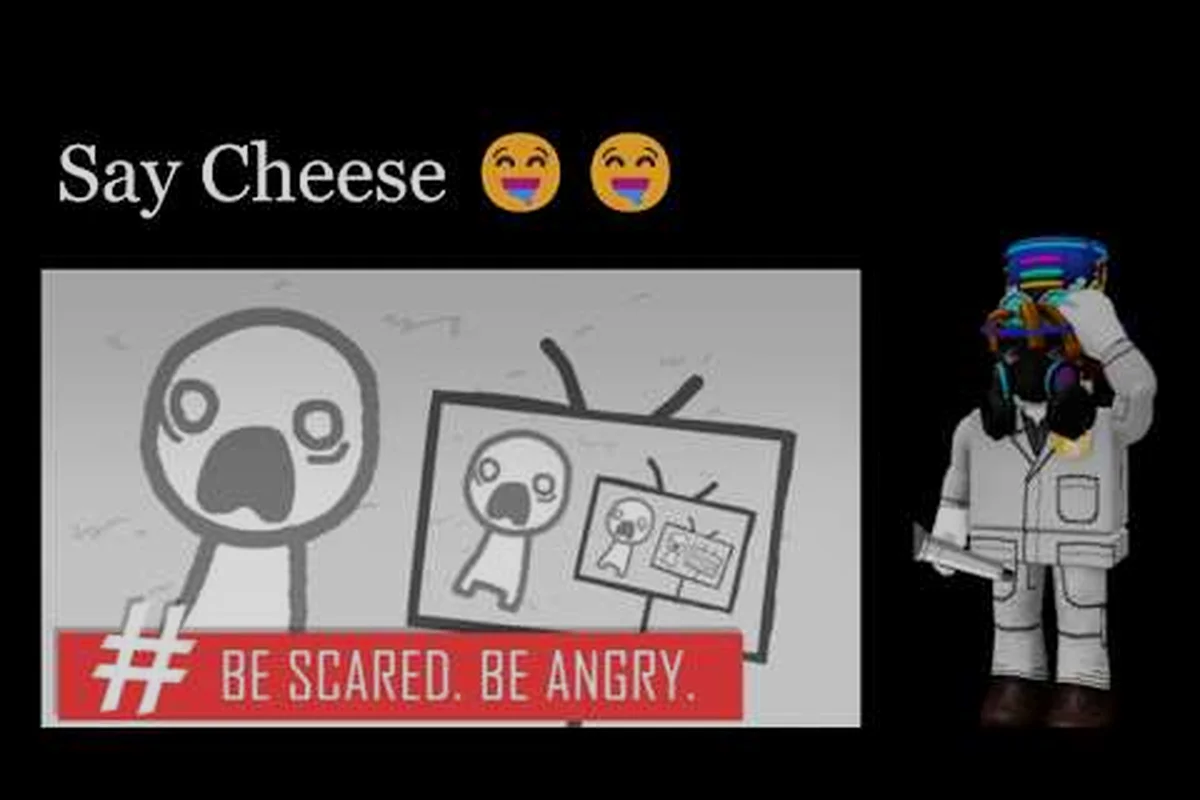
A Say Cheese Roblox first time run is worth protecting because the game’s media-and-emotion theme rewards personal reactions before outside conclusions. Use this blind-run plan to notice what you feel, record what actually happens, and finish with a clear second-session agenda.
The official page presents Say Cheese! as a story-driven adventure in which a journalist hired by a major media outlet enters a park to create chaos for a global audience. Its central framing asks whether the player will preserve a peaceful society or redirect events toward hope. That makes an unbiased first run more valuable than simply searching for the “right” result.
Protecting Your First Experience
A strong blind-run rule is to learn only what the game presents before hearing what another player concludes. The official description already gives you the role, setting, and central dilemma, but it does not document specific routes, decision branches, or a canonical solution. Enter with those facts and leave room for your own interpretation.
Community videos (as of 2026-10-31) discuss multiple endings; the creator has not published a list, a count or any ending names, so treat them as unconfirmed. Even a video made to help can accidentally replace your own reactions with the creator’s intended feeling or another player’s preferred interpretation.
| Information source | Read before the first run? | Why |
|---|---|---|
| The official Roblox description | Yes | It establishes the journalist role, park setting, media theme, and broad moral frame |
| The creator’s group announcement history | Optional | The official group lists only the experience, so extra details are unlikely to appear there |
| Full gameplay videos | No | They may reveal decisions, interpretation, or later developments before you can form your own |
| A short, conclusion-free preview | Maybe | It can confirm visual style and controls without revealing your own response |
| Another player’s final judgment | No | It can anchor your expectations and make an independent opinion harder to recognize |
The creator’s the official Mechanical Boy LLC Roblox group is the best official place to verify that a source belongs to the project. As of 2026-10-31, it lists the experience and no separate public announcement archive, so you should not expect a detailed developer roadmap there.
A Simple Information Diet
For a first-time clean slate, stop reading after you know the premise and controls shown inside the game. If you want a broader setup before playing, the first playthrough overview can help separate the official premise from interpretation. For example, on your first visit to Say Cheese!, note where the camera appears and how the journalist framing changes your attention, but avoid checking a guide for the exact ending or the strongest route. Treat the first session as a field recording of the park’s encounters: record the broadcast sequence, the choices that lead to public attention, and the consequences you can see. After finishing, compare notes on interpretation before using a replay guide for a second playthrough or a New Game+ run.
-
Known premise: You are a journalist working for “Big Media,” and the park is the location of your assignment.
-
Known theme: A camera and news broadcast frame the experience, with public attention amplifying the consequences.
-
Unknown material: Specific encounters, route details, consequences, and interpretation remain yours to discover.
Do not search for a preferred outcome, walkthrough route, or “best decision” list before the first session. That rule protects the surprise of interpretation: you may understand the same action differently after another run, and comparing impressions is more valuable than copying a route.
Protect Your Own First Answer
When a prompt presents a meaningful choice, pause for ten seconds and inspect the scene before answering. In Say Cheese, note the camera angle, background activity, NPC dialogue, and whether other players’ reactions confirm the safe or risky option; for example, a sudden movement near the objective may be a warning, while calm NPC behavior may suggest a trap. Select the response you can defend, rather than choosing only because it appears quickest or most obvious.
Before continuing your first Say Cheese Roblox run, record the option you selected, the exact prompt or dialogue that triggered it, and the visible result: an objective opened, an NPC reacted, another player moved, or a trap appeared. For example, if you chose the left corridor despite movement near the objective, note both the warning and your decision; later, you can replay that route or test the safer alternative with a clearer comparison.
-
Immediate feeling: Calm, uneasy, excited, uncertain, or another specific emotion.
-
Reason for the choice: What in the scene influenced you?
-
Uncertainty: What did you expect the choice to cause?
These notes prevent hindsight from rewriting your motivation: they preserve your original read of the camera angle, NPC dialogue, and other players’ reactions before you learn whether the trap or objective was triggered by your choice. On your second playthrough, reset to the recorded prompt, take the alternative you nearly selected, and compare the outcome—for example, choosing the safer corridor after an NPC warning rather than the quicker route that exposed you to the trap. This turns the replay guide into a controlled test of the Say Cheese decision chain, showing whether your first answer was sound, risky, or simply lucky.
What to Read Before Playing and What to Skip
The official game page is enough for orientation. The story setting is a park, the player works as a journalist, and the assignment involves producing chaos and panic for viewers. The creator also frames the final choice in terms of destroying a peaceful society or changing events to create hope.
What the official page does not document is a detailed procedure for handling the assignment. Any guide that presents precise action instructions as confirmed fact should be treated cautiously. The absence of published technical details is important context for a Say Cheese Roblox first time plan: the run is partly about reading situations, not memorizing a verified sequence.
| Content | Read? | Why |
|---|---|---|
| Official premise and maturity label | Yes | It gives the cleanest available setup |
| Creator identity | Yes | It helps separate official information from unrelated material |
| General control advice | Yes | Familiar controls reduce friction without revealing story decisions |
| Exact interaction order | No | The official page does not document a confirmed sequence |
| Recommended route | No | It may encourage tunnel vision during the first session |
| Player interpretations | After the run | It becomes more useful once you have your own reactions to compare |
The experience is listed as Adventure / Story, with a Minimal maturity label and a maximum server capacity of 12 as of 2026-10-31. That last figure is a platform capacity value, not evidence of a cooperative feature. Do not plan around grouped objectives or assume that another player will influence your story.
Read for Context, Not Answers
A useful pre-run source should answer logistical questions while leaving story questions intact. You need to know how to move, interact, exit, and handle the Roblox client. You do not need to know what a camera image means in context or which moral response the game prefers.
Community reports (as of 2026-10-31) may describe the game’s atmosphere and general pace, but they do not replace direct observation. When checking player impressions, ignore categorical statements that lack evidence, especially those that treat one interpretation as the only valid reading.
The official description also says the experience is inspired by We Become What We Behold, but that comparison applies only to the broad theme of media amplifying collective emotion. It does not transfer the original game’s characters, structure, or outcomes into Say Cheese!, so use it as context rather than a substitute map.
The Five-Minute Filter
Apply a strict filter to anything you encounter about your first Say Cheese! run: separate verified gameplay details from speculation, copied walkthrough conclusions, and second-playthrough shortcuts. For example, a replay guide may describe a later route, while a first-time article should only identify observable mechanics and confirm whether they still hold for the current version. Check the source date and patch context before trusting claims about specific mechanics, outcomes, or content changes, because an undated “working method” can otherwise mislead your first session.
-
Does it come from the official game page or creator group?
-
Does it explain a mechanic rather than announce a conclusion? 3. Does it remain accurate on October 31, 2026? 4. Does it avoid assigning undocumented details to the game? 5. Would knowing it change what you are trying to observe?
If the answer to the fifth question is yes, save it for later and do not open that page mid-run. A spoiler-free reading filter keeps the first Say Cheese! playthrough centered on your own emotional response rather than someone else’s preferred reading. For example, if a replay guide reveals a cheese-maker strategy, room-clear route, or New Game Plus unlock, note the source without following it yet; otherwise, you may lose the uncertainty that makes the first Roblox run memorable.
Staying Curious When Nothing Is Explained
Unclear prompts are likely to test interpretation because the official description does not provide a checklist for the park. Rather than fill every silence with online speculation, use a repeatable observation routine. The goal is not to uncover a secret route; it is to notice what the game makes salient.
Use Curiosity Prompts
When a prompt appears, pause before acting. The following questions help you record an observation without turning the session into a checklist hunt. They focus on actions, presentation, and your interpretation, none of which the official page specifies in advance.
| Prompt | When | Effect |
|---|---|---|
| What does the scene emphasize? | At each new situation | Separates visual storytelling from your assumptions |
| Who or what reacts, and how? | After an interaction | Records cause and response without guessing motives |
| What does the camera frame? | When framing changes | Connects the media theme to presentation |
| How does my choice alter the mood? | Immediately after deciding | Makes emotional shifts visible later |
| What information is missing? | After a prompt fades | Keeps uncertainty explicit and prevents invented rules |
These prompts also work when the screen offers no instruction. A five-second observation window may be enough to note the setting, nearby activity, and the apparent emotional tone. You do not need a correct answer for every prompt; noticing that you lack one is itself a useful observation.
What You Saw Versus What You Think
Use two columns in your notes. The first should contain only what you directly perceived: “the atmosphere became less relaxed,” or “the broadcast framing emphasized the crowd.” The second should contain your reading: “public approval may influence what happens next.”
That separation protects you from presenting speculation as fact. The creator’s page establishes that billions will watch the latest news, but it does not explain every visible reaction. A hypothesis can guide your attention during a blind first session without dictating what the game supposedly means.
Use Choices as Experiments
Treat an uncertain decision as a small experiment rather than a mistake. Before choosing, write a one-sentence prediction. After the consequence plays out, mark it supported, contradicted, or unresolved. This method is especially useful in the Say Cheese Roblox second playthrough because it lets you compare the reliability of your interpretations.
Do not describe the result publicly as a fact unless you can verify it. Instead, write: “My choice appeared to coincide with this change,” followed by the context. The distinction may seem overly careful, but it keeps the experience anchored in what the game actually showed rather than what players have inferred.
Notes a First-Timer Can Actually Take
After the first run, resist the urge to write a long recap. A short observation ledger is more useful because it captures your reasoning, emotional response, and unresolved questions. It also gives you a clean starting point for another session without turning the first experience into a checklist.
Keep a Four-Part Debrief
Complete your Say Cheese Roblox debrief immediately after finishing, before reading discussions or watching full videos. The time gap matters because your first run is still the best source for unfiltered reactions to its choices, menus, and outcomes; record what you expected versus what happened while those details remain clear, rather than reconstructing them from a later replay or letting another player’s interpretation reshape your own.
| Question | Why | Record |
|---|---|---|
| What was my first instinct? | It shows your starting interpretation without revision | A phrase or short paragraph |
| Where did the game challenge that instinct? | It identifies meaningful tension in your understanding | One moment and your reaction |
| Which choice felt most like me? | It separates personal values from a presumed “correct” route | The decision and reason |
| What question remains unanswered? | It creates a specific goal for a later run | One precise question |
This debrief should take five to ten minutes, not an entire evening. If you cannot explain what a moment did to you, describe the moment instead. “The music became tense and I chose the option that seemed less destructive” is more honest than assigning a symbolic meaning the game never confirmed.
Separate Facts, Feelings, and Theories
Sort every important note from your Say Cheese Roblox first time run into one of three categories. For a concrete example, if the Cheese avatar visibly opens a shutter while the alarm stays off, log the shutter timing and visible state as observed details; if you panicked and skipped the counter route, record that as your personal response; if you think the alarm activates after a specific camera angle, mark that connection as an unverified theory for the Say Cheese Roblox second playthrough. This separation lets you compare the replay evidence with your interpretation instead of presenting a guess as a fixed rule.
-
Observed fact: Directly shown or heard during your run.
-
Personal response: Your emotional or moral reaction.
-
Unverified theory: A plausible connection that needs more evidence.
This method improves the quality of a Say Cheese Roblox replay guide. Instead of listing supposed solutions, you can identify how the game communicates, what your first instinct got wrong, and which result remains uncertain. It also reduces the risk of turning personal interpretation into a universal claim.
Build a Minimal Decision Log
For each major choice, record only four fields: what you chose, what you expected, what happened, and what you would test differently. For example, note whether you picked a cheese-related route over a safer path, whether you used the replay guide’s map cues, and whether the first-time encounter matched your expectation. A table with ten meaningful decisions may be more useful than a page of loose impressions.
Do not add results you did not personally see. If the session ended before you had time to inspect something, mark it unvisited rather than filling the gap from community reports (as of 2026-10-31). A clean omission is more useful than a confident invention.
What to Do After the First Run
The first session is complete, but the experience is not reduced to one selected response. Your next move should depend on the quality of your notes. If you recorded clear predictions and unresolved questions, you already have a stronger basis for a second run than a player who only remembers a preferred result.
Choose One Purpose for the Next Session
A replay works best when it tests one specific question, rather than attempting to change every choice at once in Say Cheese. For example, keep the same camera framing and crowd interaction, but choose a different response to one player or decision; that makes it possible to compare the resulting scene with your recorded expectation. If the goal is to understand the media theme, focus the replay on how presentation changes the mood instead of testing dialogue and route choices simultaneously. Changing several variables together makes cause and effect difficult to identify, because you will not know which action produced the response.
| Goal | Best material to bring | Success test |
|---|---|---|
| Revisit a different decision | One choice and its recorded expectation | You can compare the same scene under a different response |
| Understand the media theme | Your camera-framing and crowd-reaction notes | You can explain how presentation guided your impression |
| Reduce uncertainty | Your single unanswered question | You either find evidence or narrow the question responsibly |
| Check the ending you reached | Your final emotional reaction and expected consequence | You can compare your prediction with what occurred |
For general pacing and presentation ideas, consult the spoiler-free playthrough tips, but use them only after your own debrief. For example, first record whether a particular camera framing changed the tension of your Say Cheese scene or whether a crowd interaction felt more suspenseful than expected; only then compare that result with the general pacing advice. This order keeps curiosity ahead of optimization, because it preserves your first-time reaction as evidence before replay suggestions narrow the scene into a controlled experiment.
Treat Replays as Hypothesis Testing
On a Say Cheese Roblox second playthrough, bring one written prediction and one observation you want to verify. Keep the same note structure if possible. When a familiar scene appears, write down what feels different before checking the previous run’s account.
That comparison can reveal more than a different route. You may notice that you interpreted a choice differently because your first answer changed the framing. It may also reveal a missed detail that was irrelevant on your first visit. Either finding strengthens your understanding without claiming that the game has one objective interpretation.
Consider a New Game Plus Only When It Fits
If the experience offers a Say Cheese Roblox new game plus route, check in game for its availability and behavior rather than assuming it changes the entire experience. The official page does not document a New Game Plus feature, so the feature is not documented as of 2026-10-31.
When it is available, use it deliberately. Compare a repeat scene with your first run, look for changes in context rather than only route, and record whether the emotional stakes shift. If no such mode appears, a normal second session can still test your unanswered questions and alternative choices.
Preserve the First Run’s Record
Save the original notes, preferably with the date and the exact choices you made. If you later start reading outside commentary, compare its language with your original reaction instead of replacing it. A small before-and-after note can reveal which conclusions you genuinely earned and which ones you absorbed after the fact.
The goal is not to preserve every strange thought. It is to preserve enough evidence to reconstruct your first encounter honestly, including the parts that felt obvious then and now appear debatable. That record becomes the foundation for a clearer replay and a more precise understanding of how the game shapes emotion through media.
Frequently Asked Questions
How should I prepare for a Say Cheese Roblox first time run?
Read the official premise, confirm the controls, and avoid detailed route videos or conclusion-heavy discussions. Write down your expectations before interacting with the scene, then record your actual feelings immediately afterward. This creates a genuine baseline and prevents another player’s interpretation from becoming your first impression.
Is it necessary to complete every interaction during the first session?
Not necessarily. Focus on understanding how the game communicates rather than rushing for completion. Your exact interaction priorities are not documented, so use the scenes you encounter and record what prompts, framing, and reactions stand out. A shorter, attentive session can produce better notes than a hurried attempt to see everything.
What should I compare during a Say Cheese Roblox second playthrough?
Compare one major decision, one prediction, and one uncertain interpretation from your first session. Keep the same observation categories so you can distinguish real changes from memory or expectation. You do not need to change every choice; a controlled comparison makes cause and effect easier to understand.
Can community videos fill gaps after the first run?
Yes, but treat them as interpretations rather than confirmed documentation. Community videos (as of 2026-31-10) discuss multiple endings; the creator has not published a list, a count or any ending names, so treat them as unconfirmed. Compare their observations with your own notes and separate direct evidence from personal analysis.
Is Say Cheese Roblox new game plus documented by the creator?
The official page does not document a New Game Plus mode, so check in game for availability and behavior. If the mode exists, use it to compare repeated scenes, decision context, and emotional changes. Treat it as a second-pass experiment rather than proof that every earlier outcome will be replaced.
The best Say Cheese Roblox first time plan is simple: verify the official premise, limit outside conclusions, record what you observe and feel, and finish with one answerable question. That approach turns the run into a personal baseline you can test during later replays without pretending the creator has documented details that remain unconfirmed.