
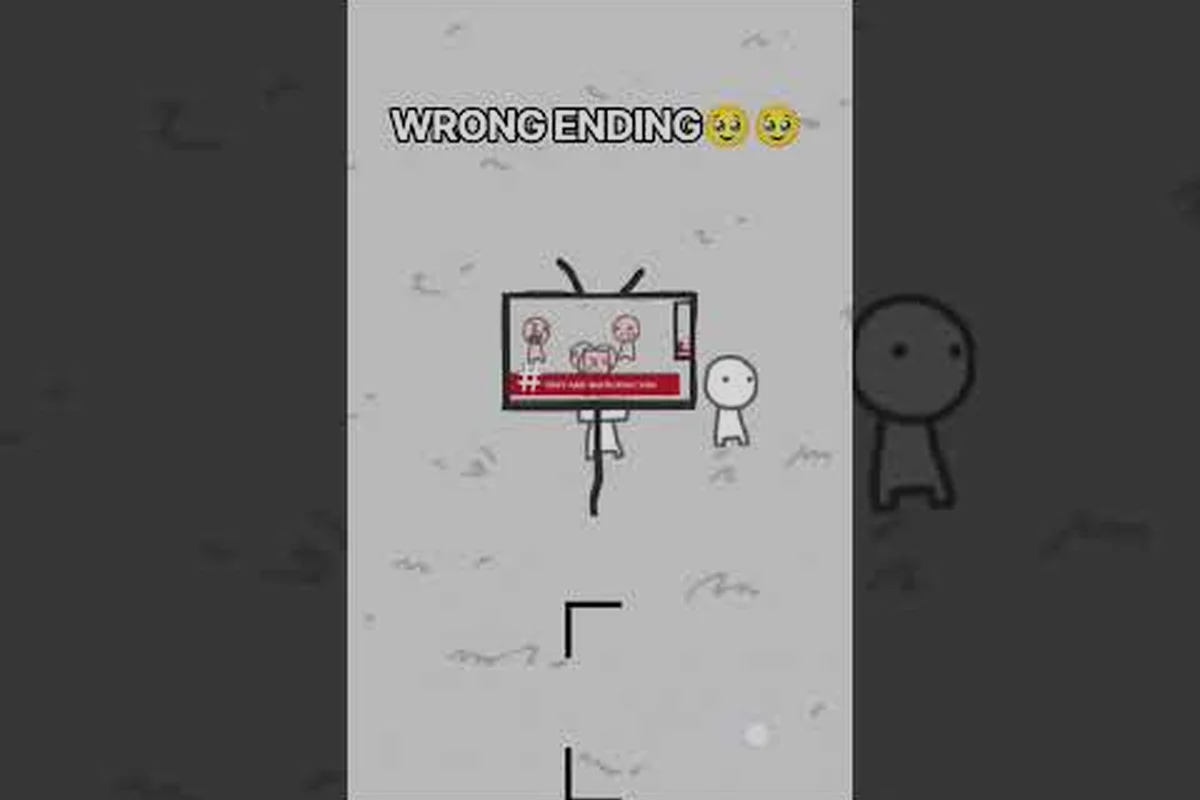
Big Media gives Say Cheese Roblox Big Media its sharpest satirical edge. Because the employer is never granted a face or identity, the institution itself becomes the villain: it hires a journalist to turn a peaceful park into spectacle, making the player question who benefits when ordinary life becomes breaking news.
Big Media as Written in the Description
The official Roblox page establishes the central arrangement of the Say Cheese Roblox Big Media premise. The player is a journalist hired by “Big Media,” sent into a park to create chaos and panic while an enormous audience watches the latest news. The description also frames the central decision as a choice between destroying a peaceful society and changing fate to bring hope to everyone. Those two directions make the employer more than a background name.
According to Say Cheese!'s page on the official Roblox site, the game is classified as an Adventure and Story experience with a Minimal maturity rating. It launched on October 19, 2026 and was updated on October 31, 2026. As of October 31, 2026, the page recorded 3,955,237 visits, 13,403 players, 49,747 favorites, and a vote ratio of 12,154 likes to 1,369 dislikes.
| Entity | What is stated | What is absent |
|---|---|---|
| Big Media | A media institution that hires the player | No portrait, biography, spokesperson, or personal identity |
| The journalist | Receives a mission connected to news and panic | No personal name, age, appearance, or backstory |
| The park | A peaceful society used as the mission setting | A larger geography is not documented |
| The audience | Watches the latest news on a massive scale | No separate audience character is documented |
| The choice | Destroying society or changing fate toward hope | The precise decision process is not documented |
The key wording distinction is between what the premise names and what the premise leaves unnamed. Big Media, the journalist, the park, the news audience, and the two broad outcomes are all stated. The identity of the employer, the journalist’s personality, and the appearance of the park are not documented on the public page. That absence should not be filled with invented personalities or dramatic interpretations.
What the premise establishes immediately
Four elements give the story its satirical engine. First, the player works for media rather than for the park. Second, the assignment is to spread disruption rather than protect the location. Third, disruption becomes content because billions are watching. Fourth, the journalist is offered a consequential choice between harm and hope.
That sequence matters because it separates the person making the story from the institution commissioning it. The player may question whether journalism itself is wrong, but the official setup also points toward the priorities of the employer. Big Media wants panic because panic produces an audience, attention, and a narrative worth broadcasting.
The camera motif and the news machine
The title’s cheese reference is paired with the line “You’re on camera!” on the official page, establishing a visual-media theme without documenting a specific device operation. Camera language evokes recording, eyewitness footage, live broadcasts, and the pressure to perform for an unseen public. These are interpretive associations rather than claims about undocumented interaction details.
The combination of camera and news creates a sharp conceptual loop. The journalist observes the park, but the journalist is also watched by the audience. That arrangement can make every action feel self-conscious: the reporter is not merely documenting reality but becoming part of the spectacle assigned to them. For broader interpretation of the game’s critique of media culture, the media criticism analysis provides a useful companion reading.
Why an Unnamed Employer Is the Point
The absence of a Big Media spokesperson is not a missing detail waiting to be repaired. It is the central design choice. Giving the employer a recognizable face could make the conflict about a villain’s personality, but leaving it anonymous directs attention toward institutional behavior: what an organization rewards, orders, and normalizes.
An unnamed authority can also represent more than one location. Big Media could be read as a sprawling news corporation, a national broadcast system, or the abstract social force that turns public attention into a commodity. The official page does not document the organization’s scale beyond the claim that billions watch the news, so it is safest to describe the reach as mass-audience power rather than assign a precise institutional structure.
| Satirical function | Effect | Example in the premise |
|---|---|---|
| Anonymous leadership | Makes authority feel larger than one person | Big Media orders disruption without offering a face |
| Mass audience | Shows how private action becomes public content | Billions watching the latest news |
| Peaceful target | Heightens the abnormality of manufactured panic | A park represents a peaceful society |
| Journalistic cover | Gives unethical action a respectable label | The player is described as a journalist |
| Two-way choice | Makes the player complicit in the outcome | Destroy society or change fate toward hope |
The unnamed employer therefore functions like a lens. It removes attention from a personal antagonist and concentrates it on the machinery of attention itself. The institution does not need a body because its effect is already visible: the player is hired to generate a spectacle, and the public becomes the audience for it.
Anonymous power is different from a missing character
Readers asking “who are you?” may interpret the question as a request for a concealed individual. The official description supports a different answer: the employer is Big Media, while the lack of a personal identity is deliberate. The premise does not document an unnamed boss waiting to appear, so it would be misleading to build a secret executive theory around the blank space.
This distinction protects the reading from a common storytelling trap. If every anonymous institution secretly has one true leader, anonymity becomes concealment. If an institution can speak only through assignments and incentives, anonymity becomes structural criticism. Say Cheese Roblox Big Media appears to favor the second approach.
Anonymity also preserves the player’s position
A named authority could pull attention away from the player. The player is the journalist carrying out the assignment, and that role makes the audience responsible for examining their own actions. If Big Media has a face, players can simply blame that face. Because the employer remains an institution, the player must confront a harder question: whether following a prestigious assignment is enough to excuse the outcome.
The Say Cheese Roblox who are you question is therefore partly about agency. The official setup identifies the player as a journalist, not as the source of all news or the sole cause of societal collapse. The player works within a system that rewards chaos, yet they are also handed the decision about what to do with that system.
The Journalist and the Institution
The Say Cheese Roblox journalist is defined by work rather than biography. The official page says the player is hired by Big Media, sent to a park, and told to spread chaos and panic. That is enough to establish a professional function and a moral task without requiring a personal history.
The role creates a three-part tension. The journalist possesses access to the park, but the public possesses the power to watch. Big Media possesses the authority to issue the assignment, but not the journalist’s final power to choose what happens. This arrangement distributes influence while keeping the player responsible for action.
| Relationship | What the premise grants | What it withholds |
|---|---|---|
| Journalist to Big Media | Employment and a mission | Contract terms, rank, compensation, and personal history |
| Journalist to the park | Physical access to the setting | The player’s relationship to local people |
| Journalist to the audience | The ability to create news they watch | Their identity, reactions, or direct influence |
| Journalist to the choice | A consequential fork between harm and hope | Exact triggers and consequences |
A useful way to understand the Say Cheese Roblox your role is as mediation. The player stands between an institution and a community. The journalist converts private conduct into public information, but the framing itself also changes what the audience thinks it is seeing. That makes the camera motif more than spectacle: it is the mechanism by which action becomes evidence and evidence becomes entertainment.
Professional label versus moral action
Calling the player a journalist creates a veneer of legitimacy. Journalism can expose wrongdoing, inform citizens, and reveal truth, yet the same tools can also manufacture outrage. The premise appears to test this ambiguity by assigning chaos-producing work to someone with a respectable title. The label gives the task a professional appearance while the consequences challenge that appearance.
The new-game overview is useful for separating this story focus from the broader play experience. For interpretation, however, the central question remains inside the premise: does media merely report the chaos, or does the act of producing and distributing it help create it?
The park is both place and subject
The Say Cheese Roblox setting is a park representing a peaceful society. A park normally suggests recreation, coexistence, and ordinary public life. Placing that environment inside a media assignment turns it into the subject of a broadcast and the victim of an attention economy.
The official page does not document specific locations, landmarks, residents, or events beyond the park setting. Those details should be left to direct observation in the game rather than inferred from the genre label. Even without extra setting information, the contrast is clear: peaceful society is the raw material, while panic is the output requested by Big Media.
How Media Satire Uses Anonymous Power
Media satire often works by exaggerating the logic of ordinary institutions. It does not need a villain to say something absurd; a mission statement can do that if the institution rewards behavior that is socially destructive. Big Media’s request to spread panic is absurd because panic is not presented as necessary information, kindness, or public service. It is the product.
Anonymous power works on several levels. The employer does not need a public identity because the mission communicates its values. It does not need to explain why chaos matters because the enormous audience makes the commercial logic visible. It does not need to argue for the journalist’s role because employment and professional language supply that authority.
| Device | Satirical effect | Reader question |
|---|---|---|
| Institution over individual | Makes corporate logic replace personal motive | Who benefits from attention itself? |
| Peace versus panic | Exposes the contradiction between information and agitation | Can news be both truthful and harmful? |
| Vast invisible audience | Makes private behavior feel permanently observed | When does attention become participation? |
| Journalist as intermediary | Assigns responsibility to a professional role | Is following instructions enough? |
| Hope as alternative | Prevents the premise from reducing every option to destruction | Can the player redirect the system? |
This is why Say Cheese Roblox Big Media matters as a story-lore subject, not simply as a phrase. The name points toward a satire about institutions, spectacle, and consent. The title’s camera promise adds another layer: images may reveal reality, but they can also package it, circulate it, and make it profitable.
Power through reach rather than contact
A face-to-face antagonist makes power visible and personal. A broadcaster or media conglomerate can exercise power at a distance. Its influence comes from reach, repetition, and the expectation that people will react. The official description’s emphasis on billions watching gives Big Media a scale that no individual character needs to possess.
This also makes the player’s role more troubling. The journalist’s actions are local, while their consequences are amplified by distribution. A single disruptive event can become a national or global story. Media power is therefore not located in a single villain; it emerges from the connection between an event, a recording or report, and an audience hungry for the next update.
The responsible-reader test
A useful critical exercise is to remove Big Media’s name and ask whether the behavior still makes sense. If a media organization hires someone to create disorder because disorder attracts viewers, the satire remains. If the story instead depended on an evil individual secretly running the network, then the institution would be merely a disguise. The official premise supports the first reading because the employer’s operating demand is stated directly.
Players can also test their assumptions against Say Cheese! media criticism. Rather than searching for a concealed mastermind, look for repeated patterns: who benefits, whose emotions are being amplified, and whether the journalist can redirect the story. These questions remain grounded in the documented premise even when specific in-game details are not documented.
Reading Big Media Without Inventing Characters
Responsible lore analysis separates documented premise, reasonable interpretation, and unsupported invention. The first comes from the official Roblox page. The second explains how its language operates. The third fills gaps with imagined personalities, secret motives, or precise events that the page never establishes.
| Tempting invention | Why it breaks the read | Better alternative |
|---|---|---|
| Big Media has a hidden leader | Replaces institutional satire with a secret-agent story | Treat the employer as an unnamed institution |
| The journalist has a fixed tragic backstory | The official page does not document personal history | Read the role through its assignment and choices |
| The park belongs to a known fictional place | No such identity is stated | Describe it as a park and peaceful society |
| The audience is one visible personality | No individual audience member is documented | Treat the audience as a mass media public |
| The choices guarantee one exact result | The precise resolution process is not documented | Compare the stated directions of harm and hope |
This table is not meant to strip the story of imagination. It identifies which imaginative interpretations are supported by the premise. Big Media can represent institutional greed, the attention economy, the power of mass spectacle, or the uneasy role of journalism without becoming a fabricated character with a name and biography.
Checking Lore Claims Without a Source
When researching Say Cheese Roblox characters, separate what a player sees from what the official page states. The public description identifies the player’s journalist role and mentions Big Media, the park, the audience, and the broad choice. Any additional personal identity or precise event should be described as not documented unless it can be verified in game.
| Claim type | Appropriate wording | Verification standard |
|---|---|---|
| Employer identity | Big Media, an unnamed media institution | Official page |
| Player occupation | A journalist hired for a mission | Official page |
| Location | A park representing a peaceful society | Official page |
| Audience scale | Billions watch the latest news | Official page |
| Cast identities | Not documented on the public page | Check in game |
| Personal motives | Not documented | Check in game |
| Broader media theme | Interpretation supported by the premise | Analytical reading |
Community videos as of October 31, 2026 discuss multiple endings; the creator has not published a list, a count, or any ending names, so treat them as unconfirmed. That sentence is the appropriate boundary for anyone extending this analysis into outcome discussions. The important thing is not to turn an uncertain report into a fixed catalogue of facts.
A note on the creator’s public footprint
Mechanical Boy LLC’s official Roblox group lists one public experience, Say Cheese! itself. As of October 31, 2026, the group had 4,810 members. The group description is written in Japanese, and its public page does not link an official website, Discord, YouTube channel, or social handle. That makes the game page the strongest official source for the premise and leaves creator commentary beyond it not documented.
For broader background and practical context, the Say Cheese! wiki guide can help organize verified information. The central lore method, however, stays simple: use the official wording as an anchor, treat interpretation as interpretation, and mark any added detail as not documented until observed directly.
Interpreting the Player’s Complicity
The premise does not merely ask whether chaos is good or bad. It places the player inside a chain of responsibility: Big Media wants panic, the journalist is assigned to produce it, and the audience consumes the result. Each role has agency, but the roles also influence one another. The player’s actions feed the audience, audience attention feeds the institution, and institutional demand shapes the assignment.
That structure makes the journalist morally ambiguous without requiring a complicated personal motive. A professional can recognize an unethical commission and still carry it out, especially when the language of the job provides prestige and purpose. The story’s question is therefore less “Is this person secretly evil?” and more “What happens when a person performs a role under institutional incentives?” These lenses can coexist. The ethical reading asks what the player does, the institutional reading asks who benefits, and the media reading asks how attention changes the event. None requires a named antagonist beyond the employer already stated.
Three lenses for the same premise
| Lens | Primary focus | What becomes visible |
|---|---|---|
| Ethical | Consequences for the peaceful society | Panic is imposed rather than naturally occurring |
| Institutional | Big Media’s demand for spectacle | The organization treats disruption as valuable output |
| Media | The gap between event and broadcast | Framing, attention, and distribution shape reality |
The hope option as a challenge
The description does not present harm and hope as equally attractive consequences without context. Instead, it offers the player a choice that can redirect the story. Because the exact decision process is not documented, it is safest to say that the premise promises a consequential fork rather than inventing the conditions required to select it.
That fork matters because it gives the player more than reactive obedience. Big Media can issue a command, but the player is still asked to decide what the command produces. A broader critical guide to the game can help readers compare how the destructive and hopeful directions affect the larger critique.
What the Public Record Confirms
The strongest available facts remain deliberately sparse, and recognizing that sparsity is part of understanding the story. The game is a Roblox Adventure and Story experience created by Mechanical Boy LLC. Its official description establishes a journalist, Big Media, a park, a mass audience, and a choice between destroying a peaceful society and bringing hope to everyone.
| Confirmed element | Public detail | Date marker |
|---|---|---|
| Release | October 19, 2026 | Confirmed by official page |
| Last listed update | October 31, 2026 | Confirmed by official page |
| Visits | 3,955,237 | As of October 31, 2026 |
| Players | 13,403 | As of October 31, 2026 |
| Favorites | 49,747 | As of October 31, 2026 |
| Votes | 12,154 likes and 1,369 dislikes | As of October 31, 2026 |
| Group membership | 4,810 members | As of October 31, 2026 |
The numerical snapshot shows strong interest, but it does not prove how many unique people experienced the story or what they concluded. Those figures can change, and community impressions remain separate from official claims. The most meaningful summary is still the one the creator published: a journalist works for media, goes to a park, and is expected to produce chaos for an audience whose scale makes the assignment feel like a social experiment.
Frequently Asked Questions
Who is Big Media in Say Cheese Roblox?
Big Media is the unnamed media institution that hires the player. The official page identifies it as the employer behind the park mission, but it provides no portrait, personal spokesperson, or biography. That absence supports reading Big Media as institutional power rather than assuming a concealed individual controls every event.
What is the journalist’s role in Say Cheese Roblox?
The player acts as a journalist hired to create chaos and panic in a peaceful park while billions watch the latest news. The role is therefore both professional and morally compromised: it turns disruption into content. The official page does not document the journalist’s personal name, history, or appearance.
Is the park the setting of the Say Cheese Roblox story?
Yes. The official description places the player in a park that represents a peaceful society. Big Media sends the journalist there to generate disruption, making the setting a target of manufactured spectacle. More detailed geography and local identities are not documented on the public page, so check in game before treating them as facts.
Are the Say Cheese Roblox characters individually named?
The public premise names Big Media and the journalist role but does not provide individual names for the cast. Any personal identities beyond the stated roles are not documented. A careful reading can still analyze the employer, player, audience, and society without inventing characters or assigning them motives the creator has not published.
Does the unnamed employer have a secret identity?
That interpretation is not documented and would weaken the premise’s satirical function. Big Media’s anonymous status allows attention to stay on the institution and its appetite for panic rather than on one hidden personality. Readers should treat any secret-leader theory as speculation and compare it with the documented mission before treating it as lore.