
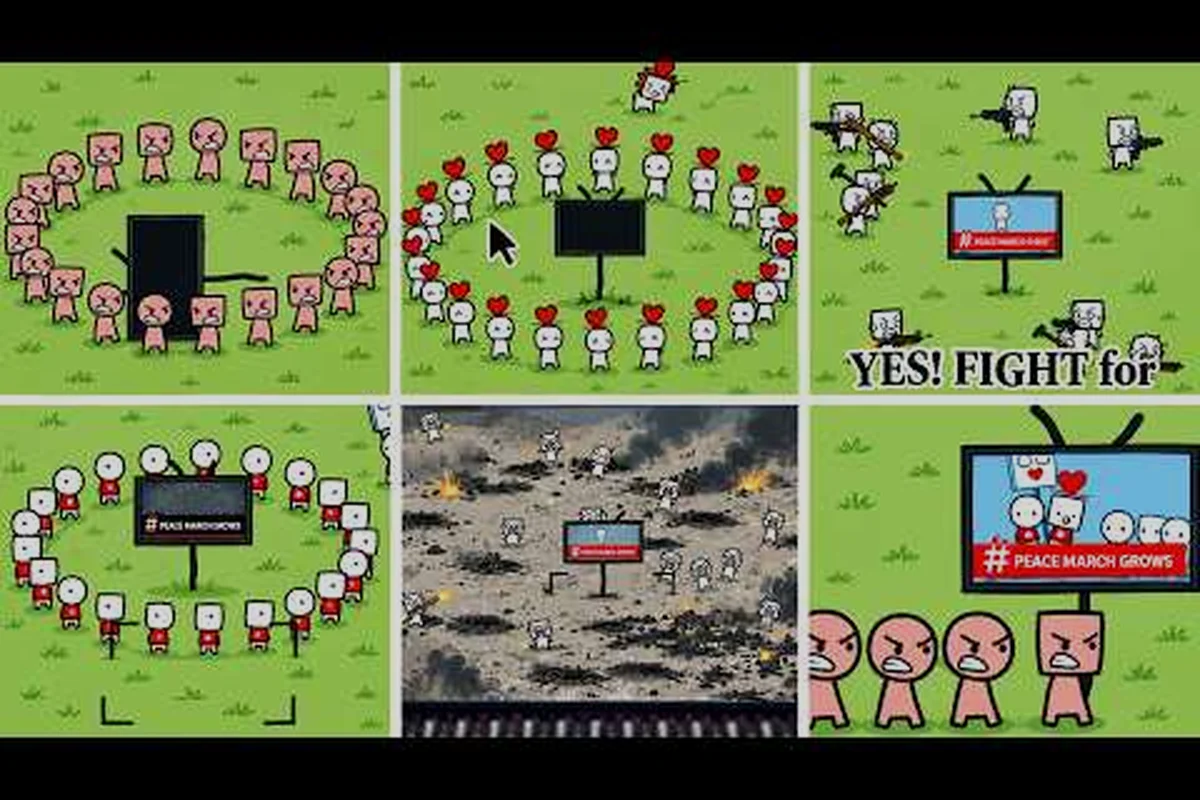
Say Cheese Roblox Part 1 is easier to approach as a repeatable opening procedure than as a guessed sequence of clicks. The official premise puts you in a park as a journalist for Big Media, where spreading chaos can reach a huge audience, so your first decisions already matter.
This walkthrough focuses on what can be verified: the correct experience, the opening objective, the choice framework, and a simple way to record your decisions. It also establishes a clean handoff for Say Cheese Roblox Part 2 without pretending that undocumented details have been confirmed.
Before You Press Play for Say Cheese Roblox Part 1
Correcting the source before pressing Play prevents the most common avoidable mistake: entering a same-name experience that was not made by the game’s actual creator. The creator identity can be checked through 2stefani1's official Roblox profile page, which is the only public creator identity the project exposes as of 2026-10-31.
The experience is officially listed as Say Cheese! [STORY], created by Mechanical Boy LLC. Its public page identifies the project as an Adventure and Story experience with a 12-player server capacity, which is only a capacity statement rather than a claim about the intended play format. The page also records 3,955,237 visits, 13,403 players, 49,747 favorites, and 12,154 likes against 1,369 dislikes as of 2026-10-31.
| Pre-play check | Verified status as of 2026-10-31 | Why it matters |
|---|---|---|
| Experience title | Say Cheese! [STORY] | Helps distinguish it from similarly named Roblox pages |
| Creator | Mechanical Boy LLC | Provides the strongest identity check available |
| Setting | A park | Establishes the official opening location |
| Player role | A journalist hired by Big Media | Defines the central tension of the opening |
| Public engagement | 49,747 favorites and 12,154 likes | Shows strong interest, though it does not reveal objectives |
| Server capacity | 12 players | Describes capacity only |
| Release date | October 19, 2026 | Places the experience within a very recent release window |
Confirm the Experience and Server
Use the official Roblox page rather than a search-result label, because the title alone does not prove that a page is connected to Mechanical Boy LLC. After opening the correct experience, choose a working server and confirm that the scene loads normally. If the scene does not present the journalist-and-park premise, return to the creator information before continuing.
This is particularly important for a guide about Say Cheese Roblox Part 1 because an early mismatch may look like a failed objective when it is actually the wrong experience. The broader Say Cheese Roblox getting started overview can help separate platform basics from details that require confirmation inside the game.
Establish the Official Premise
The official description establishes several facts that should frame the run. You play a reporter on the payroll of Big Media, sent to a park to create chaos and panic while billions watch the news. It also presents the larger choice as destroying a peaceful society or changing fate to bring hope.
What the page does not document is equally important for this section: exact button prompts, dialogue wording, the order of early interactions, and the precise conditions attached to every choice. Those details are not documented publicly, so check in game rather than assuming a fixed sequence from another player.
| Opening checklist | Expected | If different |
|---|---|---|
| Correct creator | Mechanical Boy LLC | Return to the official project page |
| Starting role | Journalist working for Big Media | Confirm you entered the story experience |
| Location | A park | Recheck the selected experience and server |
| Central tension | Public attention versus social harm | Continue only after the premise matches |
| Input response | Prompts appear and can be selected | Check in game for device-specific issues |
| First-choice record | A clear note of the selected option | Pause briefly before deciding |
A reproducible run begins with a clean slate. Close unrelated Roblox tabs if they interfere with input, avoid opening guide pages over the game, and keep notes in a separate window. That makes this Say Cheese Roblox Part 1 easier to compare with a later attempt because every recorded choice has a clear timestamp and location.
The Opening Segment Step by Step
The official segment begins with role, place, and media influence already in motion. That combination is more important than any unverified button sequence: your character is a journalist, the setting is a park, and the public reaction is part of the premise. The reproducible method is therefore to observe what the experience presents, make the most deliberate available selection, and record what changes afterward.
Do not confuse “step-by-step” with a fabricated script. The creator has not publicly listed exact early prompts, so the safest procedure follows observable stages rather than invented instructions. At each stage, note the location, what the game asks you to do, the option selected, and the immediate result.
Observe Before You Select
Read the first available prompt completely before choosing. Record the prompt in neutral terms rather than paraphrasing it as a specific rule. For example, “the game asks whether to continue with the assignment” is safer than claiming that one choice permanently destroys the society, because the official page only establishes the broader binary framing.
Your opening log can use four fields: stage, visible prompt, selected response, and result. This format remains useful even when some wording is translated by the interface or changed in a later update. It also prevents hindsight from altering the record of your first decision.
| Step | What to observe | Record | Verification rule |
|---|---|---|---|
| 1 | Role and location introduction | Setting and mission framing | Compare with the official premise |
| 2 | First available instruction | Prompt text in your own words | Do not infer hidden rules |
| 3 | First meaningful selection | Option chosen and exact wording | Treat the choice as part of the story state |
| 4 | Immediate aftermath | What changes in the scene or framing | Distinguish observed change from interpretation |
| 5 | Next decision point | Whether a new conflict appears | Check in game for current details |
| 6 | End of opening segment | Where the scene leaves you | Save the handoff state |
Keep the Camera Theme as Context, Not a Procedure
The title and the first line of the official description point toward a camera-centered presentation. That establishes the medium of the experience, but the public page does not explain every camera interaction. It would be unsafe to turn that theme into a claimed sequence of actions, so treat visible prompts as the actual source of instructions. Watch for interface cues, highlighted options, and changes in framing. If a prompt appears, respond to it directly and record your selection. If the scene advances without a conventional prompt, write “automatic scene change” instead of inventing an explanation. This distinction is essential when the goal is a Say Cheese Roblox full game run. A useful playthrough log describes what happened and why the player selected it; it does not transform interpretation into supposedly official mechanics.
Validate the Opening Outcome
After your first decision, verify that the game visibly responds. The response may take the form of dialogue, altered framing, a changed objective, or a new scene, but the specific response is not documented on the public page. Record what you actually observe, then check whether the experience continues toward another decision point.
The official narrative has already promised a choice between preserving destruction and offering hope. Still, that thematic promise does not prove how many decision screens appear, how long the opening lasts, or whether the first choice determines the full route. Save the game state if possible and note whether the next objective is explicit.
| Opening validation point | Strong evidence | Weak evidence |
|---|---|---|
| Choice registration | The selected option visibly resolves | The cursor merely hovered over it |
| Story response | Dialogue, framing, or scene changes afterward | A tooltip with no confirmation |
| Objective update | The game displays a new instruction | Player assumes progression occurred |
| Save point | The state persists after a normal reload | Progress appears only briefly |
| Handoff | The next scene can be described clearly | The player cannot identify the current state |
A repeatable Part 1 ends with a clear handoff state, not necessarily with a polished summary of every future branch. If that state is clear, you can continue through Say Cheese Roblox Part 2 and compare what remains with what the opening already established.
First Decisions and Why They Matter
Early choices matter because the official premise places the player in a media role with influence over public emotion. The game’s central tension is not simply about completing a park activity; it asks the player to consider what happens when one person can broadcast disorder to an enormous audience.
That does not mean every button is a permanent moral choice. The public description does not document whether choices are reversible, whether one choice can be revisited, or how long each decision lasts. Treat the first branch as your recorded decision, then use the game’s later feedback to determine what it actually changes.
Classify Each Choice
Use three categories in your notes. A presentation choice changes framing, dialogue, or what the player sees. A narrative choice changes the direction of the journalist’s assignment or the attitudes of people in the park. A system choice changes an explicit game state, although the exact state names are not documented, so describe the observable difference instead of inventing a label.
| Decision type | Observable evidence | How to record it | What not to assume |
|---|---|---|---|
| Presentation choice | Framing, dialogue, or scene presentation changes | Note the exact prompt and visual result | Do not call it permanent |
| Narrative choice | The assignment or public reaction shifts direction | Summarize the chosen response and result | Do not assign an ending name |
| System choice | The game displays a confirmed state change | Quote the interface wording where possible | Do not invent a mechanic name |
| Automatic transition | The scene advances without input | Mark it as automatic | Do not claim a hidden trigger |
Read the Wording, Then Judge It
Write the literal prompt in quotation marks only when you can read it accurately. Put your reading beneath it in a separate sentence. For example: “The game presents a choice” is an observation; “the game punishes kindness” is an interpretation that requires later evidence.
This distinction makes a Say Cheese Roblox full story account more credible because it preserves the path the player actually experienced. It also allows another person to reproduce the run by matching your recorded choices rather than relying on a summary that removes uncertainty.
Use the Decision Log
The most useful log includes the stage, the choice as presented, the player’s reasoning, and the immediate result. Keep the reasoning concise because the first decision may occur quickly. A strong entry should allow another reader to distinguish “I chose this because the wording encouraged me to” from “I chose this because a video told me it was optimal.”
| Decision | Record | Note |
|---|---|---|
| First prompt | Exact visible wording | Keep interpretation separate |
| First response | Option selected | Avoid guessing consequences |
| Immediate reaction | Dialogue, framing, or movement | Record only what appeared |
| Public reaction | Any visible crowd or media response | Describe without inventing causes |
| Next objective | New instruction, if shown | If absent, mark not documented |
| Confidence | High, medium, or low | Explain any uncertainty |
Community videos (as of 2026-10-31) discuss multiple endings; the creator has not published a list, a count or any ending names, so treat them as unconfirmed. That means an early choice should be evaluated from what the game shows you, not against an online spoiler chart. A no-commentary recording can help preserve your own first interpretation, while community footage is better used only as a secondary comparison after you have documented the route. The journalist and story premise overview can help place these decisions in context, but the decision log remains the primary record. It separates narrative interpretation from the observable sequence that made the run reproducible.
What Part One Should Leave You With
A successful Part 1 produces four assets: an accurate source, a clean opening record, an identified first decision, and a readable handoff state. These are modest outcomes, but they matter more than an unsupported promise about the entire route. They let the next session begin from evidence rather than fuzzy recollection.
Verify the Run Record
Before moving on, reread your notes and confirm that each statement matches what appeared on screen. If a line says the game “punished” a choice, add the visible result or remove the interpretation. If a line describes a hidden rule, replace it with “check in game.” This cleanup protects later analysis from compounding an initial mistake.
| Completion criterion | Pass condition | Repair if it fails |
|---|---|---|
| Source verified | Creator and experience match | Relocate through the official Roblox page |
| Premise confirmed | Journalist, park, and media conflict are visible | Recheck the selected experience |
| First choice logged | Prompt, selection, and result are recorded | Pause and reconstruct the sequence |
| Outcome validated | Immediate response was observed | Do not claim a consequence without evidence |
| Uncertainties marked | Each gap says not documented | Replace inference with a check-in-game note |
| Handoff ready | Current scene can be identified | Resume from the last confirmed state |
Measure Progress Without Invented Metrics
Do not assign scores, percentages, or moral grades to choices unless the game itself displays such a value. Instead, measure completion through confirmable actions: the experience loaded, the role was established, a decision was made, a response occurred, and the current state can be described.
This method is especially helpful when comparing a Say Cheese Roblox no commentary recording with your own notes. A silent run still provides observable sequence evidence, whereas a narrated run can provide reasoning. Neither format should be treated as superior unless it serves the question being investigated.
Keep the Uncertainty Ledger
Create a separate list of claims that remain unverified. The official page does not document exact prompt order, decision permanence, or the detailed structure of the park sequence. These gaps do not invalidate the walkthrough; they define what the next run needs to test.
| Claim to test later | Current status | Verification method |
|---|---|---|
| Exact early prompt order | Not documented | Record prompts in a fresh run |
| Effect of the first selection | Not documented | Compare the immediate response |
| Whether choices can be revisited | Not documented | Check in game without using outside spoilers |
| Length of the opening segment | Not documented | Time the sequence in a separate run |
| Connection to later choices | Not documented | Compare confirmed decisions with later states |
Handing Off to Part Two
The handoff should be short enough to use in the next session. Name the current location, quote the latest prompt, identify the last confirmed selection, and list one uncertainty worth testing. This creates a clean break between Say Cheese Roblox Part 1 and the next portion without pretending the opening record already explains the complete route.
Prepare a Clean Continuation
Keep the original notes unchanged. If you begin again, create a second file rather than overwriting the first. That allows you to compare Say Cheese Roblox Part 2 decisions against the opening evidence and determine whether the later route introduces new terms, changes the framing, or repeats an established conflict.
| Handoff summary | State | Next step |
|---|---|---|
| Current scene | Record the visible location or framing | Reopen the same server state if available |
| Latest prompt | Quote the last readable instruction | Confirm whether it remains active |
| Last confirmed choice | State the selected response | Observe the next result |
| Immediate reaction | Describe the visible response | Compare it with later events |
| Open question | Mark one unverified detail | Test it in the continuation |
| Evidence source | Confirm the official experience | Use the same creator listing |
The wider Say Cheese Roblox step-by-step walkthrough can support the broader run, while this record remains the authoritative handoff for your own Part 1. The important distinction is that no unsourced outcome should be added simply to make the route sound complete.
Preserve What You Learned
The opening procedure reveals three dependable habits: verify the source before loading, write down what the game actually asks, and treat every immediate response as evidence rather than proof of a final outcome. Those habits remain useful whether you continue immediately, repeat the opening, or compare community accounts later.
Part 1 is complete when you can explain the journalist’s assignment, identify your first confirmed decision, and describe the scene that follows. From that point, Say Cheese Roblox Part 2 can test the next unresolved question without rewriting or overstating what the opening established.
Frequently Asked Questions
What should I verify before starting Say Cheese Roblox Part 1?
Confirm that the experience is titled Say Cheese! [STORY] and that its creator is Mechanical Boy LLC. The official premise should place you in a park as a journalist hired by Big Media. Exact prompts are not documented publicly, so check in game if the opening does not match these details.
Is there a fixed button sequence for the opening?
No fixed sequence is documented on the creator’s public page. Record each visible prompt, select the option you intend to choose, and note the immediate response. This creates a reproducible account of your own opening without presenting unverified button instructions as official requirements.
Can early choices change the rest of the Say Cheese Roblox full game?
The official description says the larger choice involves destroying a peaceful society or changing fate to bring hope, but it does not specify how individual early choices affect later scenes. Treat the first decision as recorded evidence, then verify its actual consequences during play rather than relying on speculation.
Should I use a no-commentary recording for Part 1?
A Say Cheese Roblox no commentary recording is useful when you want a clean record of prompts, choices, and scene changes without hearing another player’s interpretation. Keep your own written log alongside it, because even a silent recording does not prove which decisions caused later outcomes.
How do I continue into Say Cheese Roblox Part 2?
Record the current location, latest prompt, last confirmed choice, immediate reaction, and one unresolved question. Start the next section from that state and preserve the original notes. This lets you compare the continuation with the opening evidence while keeping uncertain mechanics clearly labeled for in-game verification.